Showing posts with label Huawei. Show all posts

Friday, November 2, 2018

3Q 2018: Smartphones WorldWide market share: Samsung 20.3%, Huawei 14.6%, Apple 13.2%, says IDC.


According to preliminary data from the International Data Corporation (IDC) Worldwide Quarterly Mobile Phone Tracker, smartphone vendors shipped a total of 355.2 million units during the third quarter of 2018 (3Q18), resulting in a year-over-year decline of 6.0%. This was the fourth consecutive quarter of year-over-year declines for the global smartphone market, which raises questions about the market's future. IDC maintains its view that the market will return to growth in 2019, but at this stage it is too early to tell what that growth will look like.

While the overall smartphone market has declined for four straight quarters, two things stand out as major factors in the third quarter. Samsung, the largest smartphone vendor in terms of market share, accounting for 20.3% of shipments in 3Q18, declined 13.4% year over year in the quarter. And secondly, China, which is the largest country market for smartphone consumption, accounting for roughly one third of global shipments, was down as well for the sixth consecutive quarter.

Samsung had a challenging quarter with shipments down 13.4% to 72.2 million units shipped. The market share leader continues to feel pressure from all directions, especially with Huawei inching closer to the top after its second consecutive quarter as the number two vendor. In addition, growing markets like India and Indonesia, where Samsung has held leading positions for many years, are being changed by the rapid growth of Chinese brands like Xiaomi, OPPO, and vivo.

Meanwhile, China’s domestic market, which represents roughly one third of all smartphones consumed, has been in decline since the second quarter of 2017, and 3Q18 was the sixth consecutive quarter where the market sees contraction. China was down 11% in the first half of 2018 (1H18), and the challenges continued into 3Q18. Overall IDC expects this decline to decelerate with the market returning to flat growth in 2019.

"China's domestic market continues to be challenged as overall consumer spending around smartphones has been down," said Ryan Reith, program vice president with IDC's Worldwide Mobile Device Trackers. "High penetration levels, mixed with some challenging economic times, has slowed the world's largest smartphone market. Despite this, we believe this market will begin to recover in 2019 and beyond, driven in the short term by a large, built up refresh cycle across all segments, and in the outer years of the forecast supported by 5G migration."

"The race at the top of the market continues to be a heated one as Huawei once again slipped past Apple to the second position," said Anthony Scarsella, research manager with IDC's Worldwide Quarterly Mobile Phone Tracker. "Although Huawei may have beat out Apple in Q3, the holiday quarter could have Apple as the market leader thanks to the launch of three new bezel-less devices. No matter who leads in the overall market the holiday quarter should be an exciting one with a wide selection of new flagship devices available. With the new iPhones, Mate 20, Pixel 3, V40, Note 9, and OnePlus 6T, we can expect consumers will have a plethora of options when upgrade time approaches. The vast selection of high-priced handsets should move ASPs in a positive direction come next quarter."

Smartphone Company Highlights

Samsung had a very challenging quarter with smartphone shipments down 13.4% from 3Q17, with overall volumes of 72.2 million. While this was still enough to maintain the top market share position, the company does continue to lose share. The launch of the Galaxy Note 9 was successful and the device continues to build in shipments. However, Samsung's bigger challenge is the ground they are losing at the mid-range and low-end. Recent announcements of revamping the product portfolio to bring new features and awareness to non-flagship models could possibly help this slide. Samsung will most likely look to new A-Series devices to fill the gaps left in the mid-tier across numerous markets.

Huawei landed in the number two position for the second straight quarter. While its share was down slightly from last quarter's 15.9%, overall the company should be pleased with shipping 52.0 million handsets and grabbing 14.6% of the overall market. From a product perspective, its P-series and recent update to its Mate-series are keeping it as competitive as ever at the top of the market. And its Honor brand, which is primarily marketed toward a younger audience and online sales, has continued to do well in many markets.

Apple's newest iPhones helped push third quarter shipments to 46.9 million units, up 0.5% from the 46.7 million units last year. Apple once again launched three new devices at its Fall event, as the new 6.5-inch iPhone XS Max and 5.8-inch iPhone XS were joined by the more affordable iPhone XR in the Apple line-up. The new XS Max and XS continue off the success from last year's iPhone X but bring a new screen size option with more power and increased performance to the table. And Apple has once again improved the camera, upped the storage, and added a new faster processor via the A12 Bionic chip, which is the first 7-nanometer chip for Apple. 

Older iPhones, such as the 6S, 7, and 8, all received price cuts late in the quarter, which will balance the iPhone portfolio across all price tiers for the holiday quarter. The older SE and iPhone X from last year have been dropped from the Apple line-up. The fourth quarter will include shipments for the vastly popular iPhone XR, which have not been counted in IDC's Q3 figures.

Xiaomi once again grew its share to a new company high capturing 9.7% of all smartphones shipped worldwide in 3Q18. Xiaomi continues its global expansion with market share gains in countries where it has been growing it presence, including India and Indonesia, and making headway into European markets like Spain where it continues to cause disruption. Its Redmi 5A, Redmi 5 Plus, and Redmi Note 5 have continued to do well, with the newer Redmi 6/A/Pro successors ramping up quickly.

OPPO like Samsung saw shipments decline year over year, although on a much smaller scale. Despite that, OPPO remained the number 5 vendor in terms of market share with 29.9 million shipments in 3Q18, down 2.1% from a year ago. Like a few of its competitors that continue to climb the smartphone ladder, OPPO is beginning to gain global attention for some of its newer flagship devices that have come with highly marketed launch events.

Designs on the Find X and R17 products are raising the bar for OPPO, and in return they are continuing to see their user ASPs increase. 

Tuesday, July 31, 2018

2Q 2018: Smartphones market share worldwide: Samsung 20.9%, Huawei 15.8%, Apple 12.1% says IDC.


Smartphone Rankings Shaken Up Once Again as Huawei Surpasses Apple, Moving into Second Position While Overall Market Declined 1.8% in Q2 2018, According to IDC.

According to preliminary data from the International Data Corporation (IDC) Worldwide Quarterly Mobile Phone Tracker, smartphone vendors shipped a total of 342.0 million units during the second quarter of 2018 (2Q18), resulting in a 1.8% decline when compared to the 348.2 million units shipped in the second quarter of 2017. The drop marks the third consecutive quarter of year-over-year declines for the global smartphone market and only the fourth quarter of decline in history. IDC believes this is the result of churn in some highly penetrated markets, although many high growth markets still exist and should return smartphone shipments to overall growth.

The arrival of Huawei in the second position marks the first quarter since 2Q10 where Apple has not been the number one or two smartphone company in terms of market share. Huawei delivered shipments of 54.2 million units to move into the second position with a record high market share of 15.8%. Samsung maintained a comfortable lead, although indications from its recent 2Q18 earnings call suggest its mobile division revenues will face challenges moving forward.

"The continued growth of Huawei is impressive, to say the least, as is its ability to move into markets where, until recently, the brand was largely unknown," said Ryan Reith, program vice president with IDC's Worldwide Mobile Device Trackers. "It is worth noting that Apple moved into the top position each of the last two holiday quarters following its product refresh, so it's likely we'll see continued movement among the top ranked companies in 2018 and beyond. 

For most markets, the ultra-high end ($700+) competition is largely some combination of Apple, Samsung, and Huawei, depending on the geography, and this is unlikely to change much in the short term. At the same time, Xiaomi, OPPO, and vivo are all slowly pushing their customer base upstream at a price tier slightly lower than the top three. This is an area they should all watch closely as the builds in this segment are getting increasingly more advanced."

"The combination of market saturation, increased smartphone penetration rates, and climbing ASPs continue to dampen the growth of the overall market," said Anthony Scarsella, research manager with IDC's Worldwide Quarterly Mobile Phone Tracker. 

"Consumers remain willing to pay more for premium offerings in numerous markets and they now expect their device to outlast and outperform previous generations of that device which cost considerably less a few years ago. To contest this slowdown, vendors will need to focus on new innovative features and form factors combined with incentives and promotions to drive growth in many of these highly competitive markets moving forward."

Smartphone Company Highlights

Samsung once again remained the leader in the worldwide smartphone market despite a 10.4% decline in shipments from last year. The flagship S9/S9+, which launched late in the first quarter, witnessed slower than normal sales according to Samsung. Samsung claims the slowdown is due to both intensified competition at the high end and an overall sluggish smartphone market. 

The Korean giant will look to bolster sales in the coming weeks as we await the arrival of the new Galaxy Note 9. The new Note will be unveiled on August 9th and is expected to launch earlier than the Note 8 to gain a foothold ahead of pending fall launches from Apple and others. The device is expected to feature a bigger battery, new S-Pen capabilities, and increased performance.

Huawei surpassed Apple for the first time to move into the second position based on global market share. It continues to lead the China smartphone market with a record-high market share of 27.0% in 2Q18. In the first half of this quarter, Huawei's P20/P20 Pro series found strong demand in the $600-$800 price segment, helping Huawei build a high profile in the market. 

In the second half, with the release of its "GPU Turbo" technology, Huawei continued to earn a good reputation. 618 promotions led to strong sales for Honor models in the online channels as the Honor brand continues to be a key driver of growth for the Chinese tech giant.

Apple dropped to the third spot for the first time despite its second quarter growth. Apple shipped 41.3 million iPhones, representing modest growth of 0.7% over the 41.0 million units shipped last year. The iPhone continued to perform well at the high end as the iPhone X remains a top seller in many markets. 

Apple will look to regain control of the market this fall with the expected launch of three next generations of iPhone models. The new models are rumored to bring different screens sizes, price points, increased performance, and new features to the table when they arrive next quarter.

Xiaomi has pulled ahead of Samsung for the number 1 position in India over the past few quarters and has now closed the gap with Samsung in Indonesia as it ramped up its local production to address the increased demand during Ramadhan period, while also expanding its online channel presence and opening up more Mi home stores in the country.

OPPO faced a slowdown in key markets like India and most of Southeast Asia as it eased back on its aggressive marketing and sales activities in the region. Despite this, the company still managed to grow 5.1% over last year as it continued its expansion into other markets such as the Middle East & Africa. The recent launch of the Find X has also garnered Oppo some praise as the innovative, bezel-less and notch-less design has grabbed the attention of many.


Thursday, January 25, 2018

Why the Honor 7X $199.99 smartphone is a Best Seller on Amazon.?


The Huawei Honor 7X is a beast in a low price just $199.99 with all these powerful specifications and features. Take a look:

Edge-to-edge all-screen design. With a high screen-to-body ratio and 2160 x 1080 FHD+ resolution, the Honor Full View display on the Honor 7X brings you an astonishing, immersive visual experience.

Take the lead in games. The Honor 7x’s 18: 9 screen provides more real estate than a traditional 16: 9 screen, giving you a wider view than other gamers.

Never fall behind in catching up with friends while watching videos. The one-key screen split function offers an even faster multi-management experience.

The Classic metal design of the Honor 7X is a delight to hold, with its perfectly rounded edge. The 2.5D glass face flows seamlessly into the aluminum chassis.

The dual-lens 16MP + 2MP rear Camera captures life’s magical moments in the highest definition, empowering your inner photographer.


Specifications (credits gsmarena):

NETWORK Technology
GSM / HSPA / LTE
LAUNCH Announced 2017, December
Status Available. Released 2017, December
BODY Dimensions 156.5 x 75.3 x 7.6 mm (6.16 x 2.96 x 0.30 in)
Weight 165 g (5.82 oz)
Build Front glass, aluminum body
SIM Hybrid Dual SIM (Nano-SIM, dual stand-by)
DISPLAY Type IPS LCD capacitive touchscreen, 16M colors
Size 5.93 inches, 90.7 cm2 (~77.0% screen-to-body ratio)
Resolution 1080 x 2160 pixels, 18:9 ratio (~407 ppi density)
Multitouch Yes
Protection Corning Gorilla Glass (unspecified version)
  - EMUI 5.1
PLATFORM OS Android 7.0 (Nougat)
Chipset HiSilicon Kirin 659
CPU Octa-core (4x2.36 GHz Cortex-A53 & 4x1.7 GHz Cortex-A53)
GPU Mali-T830 MP2
MEMORY Card slot microSD, up to 256 GB (uses SIM 2 slot)
Internal 64 GB, 4 GB RAM (L21) or 32/64 GB, 4 GB RAM (L22) or 32 GB, 3 GB RAM (L24)
CAMERA Primary Dual: 16 MP (1/2.9", 1.25 µm) + 2 MP, phase detection autofocus, LED flash, check quality
Features Geo-tagging, touch focus, face detection, HDR, panorama
Video 1080p@30fps, check quality
Secondary 8 MP, 1080p
SOUND Alert types Vibration; MP3, WAV ringtones
Loudspeaker Yes
3.5mm jack Yes
  - DTS audio
- Active noise cancellation with dedicated mic
COMMS WLAN Wi-Fi 802.11 b/g/n, Wi-Fi Direct, hotspot
Bluetooth 4.1, A2DP, EDR, LE
GPS Yes, with A-GPS, GLONASS
Radio FM radio
USB microUSB 2.0
FEATURES Sensors Fingerprint (rear-mounted), accelerometer, proximity, compass
Messaging SMS(threaded view), MMS, Email, Push Mail, IM
Browser HTML5
  - MP3/WAV/eAAC+/Flac player
- MP4/H.265 player
- Photo/video editor
- Document viewer
BATTERY Non-removable Li-Ion 3340 mAh battery
Stand-by Up to 647 h (3G)
Talk time Up to 21 h (3G)
MISC Colors Black, Blue, Gold, Red
Price About 290 EUR, USA $199.99
TESTS Performance Basemark OS II: 1529 / Basemark OS II 2.0: 1398
Basemark X: 8616
Display Contrast ratio: 1941 (nominal), 2.734 (sunlight)
Camera Photo / Video
Loudspeaker Voice 66dB / Noise 71dB / Ring 85dB
Audio quality Noise -89.5dB / Crosstalk -86.6dB
Battery life
Endurance rating 77h

Honor 7X - 18:9 screen ratio, 5.93" full-view display. Dual-lens camera. Unlocked Smartphone, Black (US Warranty)


Sunday, November 5, 2017

Q3 2017: WorldWide Tablet market share: Apple 25.8%, Samsung 15%, Amazon 10.9%


Notes:

    Total tablet market includes slate tablets plus detachable tablets. References to "tablets" in this release include both slate tablets and detachable devices.

    "Convertibles" refers to convertible notebooks, which are notebook PCs that have keyboards that can either flip, spin, or twist, but unlike detachable tablets, convertible notebook keyboards are hardwired to the display.

    Data is preliminary and subject to change.

    Company shipments are branded device shipments and exclude OEM sales for all companies.

    The "Company" represents the current parent company (or holding company) for all brands owned and operated as subsidiary. 

The third quarter of 2017 (3Q17) closed with 40 million tablets shipped globally, according to preliminary data from the International Data Corporation (IDC) Worldwide Quarterly Tablet Tracker. Growing demand for smartphones combined with the lengthening replacement cycle of tablets and strengthening position of traditional PCs left the tablet market in an awkward middle ground that it has not been able to escape. Growth in 3Q17 declined 5.4% year over year, marking the twelfth consecutive quarter of annual decline.

"There's a penchant for low-cost slates and this holds true even for premium vendors like Apple," said Jitesh Ubrani, senior research analyst with IDC's Worldwide Quarterly Mobile Device Trackers. "However, many of these low-cost slates are simply long-awaited replacements for consumers as first-time buyers are becoming harder to find and the overall installed base for these devices declines further in the coming years."

Meanwhile, growth in the detachable tablet market has been slower than expected as Apple and Microsoft are essentially the only two vendors supplying the category and other PC vendors champion the convertible PC form factor.

"In a recent IDC survey, owners of both convertibles and detachables stated they were far more inclined to recommend a convertible to another shopper than a detachable," said Linn Huang, research director, Devices & Displays. "Market momentum has steadily shifted away from the latter towards the former over the course of this year. The 2017 holiday season may prove to be a critical crossroad for the detachables category."

Tablet Company Highlights:

Although Apple still enjoys a substantial premium over competitors, the lower-priced iPad has helped it to cement the first-place position. The latest version of iOS has helped make iPads a more serious PC competitor than ever before but the need for legacy apps (especially in the commercial segment) and strong value offerings from other PC and mobile vendors has prevented iPads from becoming the primary computing device for the masses.

Samsung offers one of the broadest range of detachable tablets that includes multiple screen sizes and operating systems yet detachable tablets account for less than 10% of its shipments in the quarter. These high-priced, halo devices have led to Samsung's premium image but the company still relies heavily on the lower cost Tab A and E series. This may create long-term issues as rival tablet vendors often offer products at a better value.

Amazon.com's aggressive hardware strategy in the tablet market has proven to be quite successful as the company managed to grow 38.7% on an annual basis. The low-cost hardware push has always been a means to create a long-standing and ongoing relationship with end users. To that extent, Amazon even offered the 7-inch tablet for under $30 during the Prime Day Sale.

Huawei and Lenovo managed to tie for fourth place as both companies have maintained a similar strategy of focusing on low-cost devices in Asia/Pacific and Western Europe. Huawei has managed to maintain some differentiation by concentrating on cellular-enabled tablets while Lenovo recently launched the Tab 4 lineup, which offers competitive specs and features at a great value. 


Monday, September 18, 2017

Huawei takes on iPhone X on video. Makes fun of Apple.


CNBC News on a Video details a little more what Huawei posted on twitter about the iPhone X making fun of Apple:


Huawei posted a tweet with GIF on Septembe 12 after Apple`s Keynote event where the company unveiled the iPhone X. The Huawei tweet says:

Feeling disappointed? We've got a real surprise exceeding anything you've ever seen. Coming 16 Oct ... #HuaweiMate10

Huawei is clearing taking on the Apple that vanish it as it were biodegradable.


After that Huawei also posted a teaser GIF of the Huawei Mate 10 that will unveil in October 16.

On this teaser GIF video Huawei is showing "intelligent power save and battery super charge"


Monday, September 4, 2017

IFA 2017: Huawei unveils the Kirin 970 8coreCPU/12coreGPU with native AI processing.


Huawei Reveals the Future of Mobile AI at IFA 2017

CEO Richard Yu Unveils the Kirin 970, Huawei’s first mobile AI computing platform

At IFA 2017, Huawei Consumer Business Group unveiled a new era in smartphone innovation. In a keynote address, Richard Yu, CEO of Huawei Consumer Business Group revealed Huawei’s vision for the future of artificial intelligence with the launch of the Kirin 970. By combining the power of the cloud with the speed and responsiveness of native AI processing, Huawei is bringing AI experiences to life and changing the way we interact with our devices.

“As we look to the future of smartphones, we’re at the threshold of an exciting new era,” Yu said. “Mobile AI = On-Device AI + Cloud AI. Huawei is committed to turning smart devices into intelligent devices by building end-to-end capabilities that support coordinated development of chips, devices, and the cloud. The ultimate goal is to provide a significantly better user experience. The Kirin 970 is the first in a series of new advances that will bring powerful AI features to our devices and take them beyond the competition.”

After years of development, Cloud AI has seen broad application, but user experience still has room for improvement in areas such as latency, stability, and privacy. The goal is for Cloud AI and On-Device AI to complement each other. On-Device AI offers strong sensing capabilities, that are the foundation of understanding and assisting people. Sensors produce a large amount of real-time, scenario-specific, and personalized data. Supported by strong chip processing capabilities, devices will become more cognitive of user needs, providing truly personalized and readily accessible services.

The Kirin 970 is powered by an 8-core CPU and a new generation 12-core GPU. Built using a 10nm advanced process, the chipset packs 5.5 billion transistors into an area of only one cm². Huawei’s new flagship Kirin 970 is Huawei’s first mobile AI computing platform featuring a dedicated Neural Processing Unit (NPU). Compared to a quad-core Cortex-A73 CPU cluster, the Kirin 970's new heterogeneous computing architecture delivers up to 25x the performance with 50x greater efficiency. Simply put, the Kirin 970 can perform the same AI computing tasks faster and with far less power. In a benchmark image recognition test, the Kirin 970 processed 2,000 images per minute, which was faster than other chips on the market.

New developments in AI require joint effort across the entire value chain, involving tens of millions of developers, and the experience and feedback of hundreds of millions of users. Huawei is positioning the Kirin 970 as an open platform for mobile AI, opening up the chipset to developers and partners who can find new and innovative uses for its processing capabilities.


Friday, February 17, 2017

Year 2016: Tablets Global Shipments market share: Apple 27%, Samsung 17.2%, Amazon 7%


Market research firm TrendForce reports annual tablet shipments worldwide posted a decline for 2016, dropping 6.6% to 157.4 million units. However, total shipments from branded tablet vendors surpassed expectations because of the robust year-end holiday sales.
"Together, major tablet brands posted a marginal decline in their total shipments for 2016," said Anita Wang, TrendForce notebook analyst. "Chief shipment contributors included Apple and Amazon. The former enjoyed strong iPad sales in the fourth-quarter busy season, and the latter nearly doubled its annual shipments. Other brands such as Huawei, Lenovo and Acer also expanded their shipments despite market headwinds."
As for white-box (white brand) vendors, Wang pointed out that their shipments were impacted by limited panel supply. "Due to profit considerations, panel makers scaled back the supply of tablet panels," noted Wang. "As a result, global white-box tablet shipments for 2016 fell by more than 20% compared with the previous year."
Going into 2017, demand for tablets will continue to be curtailed by the increasing consumer preference for large-size smartphones. Furthermore, major brands and white-box vendors will be constrained by insufficient panel inventory as South Korean panel makers cut back on the production of LCD tablet panels. According to TrendForce's projection, this year's global tablet shipments will come to 147.8 million units, a drop of 6.1% from 2016.
Apple posted better than expected iPad shipments last year; at least three new iPad models are lined up for 2017
Global iPad shipments for 2016 totaled 42.55 million units, representing an annual decline of 14.1%. Nonetheless, iPad shipments on the whole were above market expectations. Strong demand in North America and exceptional results from year-end holiday sales sustained iPad shipments last year.
Wang pointed out that Apple has as many as three to four new iPad products lined up for 2017. "In addition to an economically priced 9.7-inch model that is ready for market release, Apple will also launch a new 12.9-inch model," said Wang. "Furthermore, Apple will also introduce a new 10.5-inch iPad. This will be a new size category for the device series."
TrendForce estimates that this year's iPad shipments will fall by 6~8% annually to around 40 million units. There are reports of a "Pro" version of iPad mini being planned. If Apple decides to release such a product this year, the annual iPad shipments may stabilize and even register growth.
Samsung remains focused on promoting OLED tablets
Samsung's tablet shipments for 2016 fell 19.4% annually to 27 million units. "The general decline in tablet demand and the fierce market competition compel Samsung to offer products with higher specifications and unique features to in order to maintain profitability for its tablet business," said Wang. "OLED displays therefore will continue to be an important part of Samsung's marketing strategy for this year." Samsung has scheduled two models, respectively sized 9.7 and 12 inches, to be released in the first quarter of 2017. Both models will feature an OLED screen.
Samsung's tablet shipments for this year are estimated to fall by 8~10% annually to around 25 million units. The brand will be concentrating on developing the high-end segment of the tablet market with OLED products rather than growing its shipment volume.
Microsoft saw flat shipment growth last year and will face the challenge of supply bottleneck for panels this year
Looking at other brands, Amazon posted a phenomenal 99.4% annual growth in its tablet shipments for 2016, totaling 11 million units. Amazon benefited from its vast base of service subscribers and was very successful in its fourth-quarter promotional activities. By nearly doubling its annual volume, Amazon climbed to the third place in the 2016 ranking of tablet brands.
In addition to the home market, Lenovo also targeted Europe, North America and Japan for shipment expansion last year. Lenovo grew its global tablet shipments by 12.3% annually to 10.9 million units and took fourth place in the 2016 ranking. Lenovo did particularly well in the fourth quarter as favorable currency exchange rates increased channel distributors' stock-up demand for its products.
Huawei last year committed substantial resources on its tablet products with a special focus on tablets with phone function and low-priced models. The brand also expanded shipments in overseas markets by leveraging its smartphone channels and close relationships with telecom companies. Huawei retained its fifth-place position in the annual tablet shipment ranking with a volume of 9.77 million units for 2016.
Microsoft in the second half of 2016 oriented its marketing efforts for the Surface Pro series towards business customers and made a strong sales push in the year-end holiday season. On the whole, Microsoft's shipments of the Surface Pro series totaled about 3.89 million last year, a decline of just 1.4% compared with the 2015 shipment figure for the device series. The brand held on to its sixth-place position in the annual ranking.
Looking ahead, Microsoft has scheduled to launch Surface Pro 5 in the first half of 2017. However, Wang noted that shipments of the Surface Pro series are going to be affected by low panel supply through 2017. "The decision by the major panel supplier Samsung Display (SDC) to reduce its LCD tablet panel production, along with the limited Oxide TFT capacity, will work against Microsoft as it tries to secure panel supply for the Surface Pro series," said Wang.
TrendForce's current shipment estimate for the Surface Pro series in 2017 is less than 3 million units. On the other hand, Microsoft also has a 10-inch device in the works. If this product is released this year and does well in sales, then there is possibility for upward revisions in Microsoft's shipments of the Surface Pro series.
ASUS shipped 3.4 million tablets in 2016, representing a significant drop of 35.3% from 2015. ASUS currently wants to maintain profitability for its tablet business and is not interested in lowering prices to boost sales. If the brand stays with this strategy during 2017, its annual shipments are expected to fall by 5~10%.

Tuesday, February 7, 2017

ISE 2017: Huawei & Aurora Multimedia To Introduce World's First 10G PoE Solution.

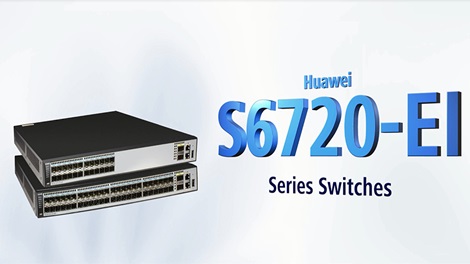
Resultado de imagen para S6720-32C-PWH-SI HUAWEI

Huawei announces the world's first network switch to allow the IPX transceiver by Aurora Multimedia Corporation to receive Power over Ethernet (PoE) directly from the 10G network switch at ISE 2017. The switch will enable 10G speed and PoE function to be carried by the same data cables, a much needed solution for the AV industry. Huawei is a partner with Aurora in their IPBaseT® technology, which debuted over two years ago with the IPX Series, 10G with zero compression/zero latency and 4K streaming boxes and wall plates.

Huawei is releasing its 24-port S6720-32C-PWH-SI and its 48-port S6720-52X-PWH-SI 10G PoE/PoE+/PoE++ switches in the second quarter of 2017. With Aurora's technology, the products will exhibit the effectiveness of 10G PoE in real-world applications and usher in a new era of 10G products.

"We are glad to work with Aurora on this innovative solution," said Kevin Hu, President of Switch & Enterprise Gateway Product Line at Huawei. "This is an up and coming use case in the industry requiring 10G speed and PoE function.

"It is truly exciting to see the low latency, non-compressed 4K video transmitted through our new S6720 series switches," continued Hu. "We look forward to future collaboration with Aurora to provide the most advanced solutions to the A/V Industry."

This new solution adds to Huawei's broad array of switches. Huawei switches are designed to help customers achieve their business priorities, whether it's speed, security, strength, cloud computing, big data, or as with Aurora Multimedia.

"Aurora designed the IPX Series with the intent of changing the topology of A/V industry and is the first to introduce many new capabilities never previously accomplished on a streaming platform," stated Paul Harris CEO of Aurora. "PoE over 10G is one of the capabilities, but requires the industry to provide the other half. Huawei is an Aurora IPBaseT® partner and I am pleased to collaborate and show the way to a new era of streaming content over 10G networks with no power supplies at the end points."

The S6720 series switches include:
  • 24*10G or 48*10G PoE Ports and 4*10G SFP+ Ports
  • Pluggable Redundant Power Supplies
  • Up to 320G Stack Bandwidth
  • 60 W PoE++, long-distance power supply and Fast PoE
  • Multi Speed Support
Huawei experts will be available to discuss the S6720 series switches in Booth 11-C110 at ISE 2017.

About Huawei 
Huawei is a leading global information and communications technology (ICT) solutions provider. Our aim is to enrich life and improve efficiency through a better connected world, acting as a responsible corporate citizen, innovative enabler for the information society, and collaborative contributor to the industry. Driven by customer-centric innovation and open partnerships, Huawei has established an end-to-end ICT solutions portfolio that gives customers competitive advantages in telecom and enterprise networks, devices and cloud computing. Huawei's 170,000 employees worldwide are committed to creating maximum value for telecom operators, enterprises and consumers. Our innovative ICT solutions, products and services are used in more than 170 countries and regions, serving over one-third of the world's population. Founded in 1987, Huawei is a private company fully owned by its employees.


For more information, please visit Huawei online at www.huawei.com or follow us on: 


About Aurora Multimedia 
Aurora Multimedia products incorporate state-of-the-art technologies that surpass typical specifications and features. From the introduction of the industry's first non-proprietary, Web-standards-based IP control systems and touch panels, to today's advanced HDBaseT™ and IPBaseT® IP video distribution solutions – has made Aurora a dominant force in the AV industry. Advanced AV processors with scaling, multi-image rotation, and dual/quad display processing only add to our highly adaptive, diversified product line. Aurora provides solutions for a variety of global markets, including government, education, security, hospitality, corporate, and house of worship. www.auroramm.com


Huawei Media Contact:
Huawei Analyst Contact:
Francis Hopkins
Sarita Kincaid
Director, Corporate Communications
Director, Enterprise Analyst Relations
(240) 472-1724 (mobile)
(408) 330-5324 (mobile)


SOURCE Huawei

Monday, January 9, 2017

CES 2017: Huawei presented the HONOR 6X smartphone.


Honor, the leading smartphone e-brand under Huawei Group, unveiled its latest mighty technology beast - Honor 6X at CES 2017, boasting a range of premium features such as dual-lens rear camera, long-lasting battery and strong performance. The debuting of Honor 6X remarks another year of fast growth and prosperity for Honor. Entering 2017, Honor has announced a series of strategic collaborations with global partners which are also internet-based and defined by their millennial driven products, services and business models.

Honor's 2017 global digital partners covers the areas of music, news, tools and games. The move to expand its breadth within the internet and application based ecosystem is another bold step from Honor to dive into a new era of co-created, fun experiences designed with millennials in mind.

Mr. George Zhao, President of Honor, said: "We would like to express the deepest gratitude to our partners around the world. We believe that the win-win partnership that we have established creates synergies for the many of us to achieve extraordinary results of business which cannot be accomplished by one's own capability, at the same time offers better mobile internet experience to digital natives to address their evolving needs and preferences. The achievements brought by the extensive partnership confirm the motto that Honor 6X embodies: 'Double or Nothing'!"

Key Features of Honor 6X
The Honor 6X runs on a Kirin 655 SoC with octa-core CPU and packs a 5.5-inch full HD (1920*1080p) display with 2.5D curved glass. Keen photographers will be impressed with the new 12MP + 2MP dual lens camera with multiple shooting modes, while a few little surprises in the form of new functionality includes: split-screen, scrolling screen, video enhancement and eye-comfort mode and 3,340 mAh of battery life. These, along with multiple other enhancements to the performance, camera, display and overall user experience have been made to allow millennial to enjoy a world of music, gaming and movies.

Key Highlights of Honor Global Partnerships.


Gameloft
As part of the launch of the Honor 5X in May 2016, Honor teamed up with Gameloft, leader in the development and publishing of mobile games, to launch an engaging campaign: The Asphalt 8 Honor Cup. The challenge enabled players across the US, France, Germany and Russia to compete head-to-head for Honor and Gameloft communities in the popular mobile game, Asphalt 8: Airborne. Further to the successful collaboration of Honor 8, three Gameloft games will also be featured in the new Honor 6X.

AccuWeather
AccuWeather will provide Honor 6X with the AccuWeather powered widget and detailed weather information which will provide users with real-time, global weather conditions with Superior Accuracy along with 5-day and hourly forecasts.

Kika Santa Claus's War of Honor
To celebrate the launch of the Honor 6X during the festive season, Honor joined hands with Kika, a creative developer for innovative technologies that support user expressions through next-generation keyboard applications, to create the game, Santa Claus's War of Honor, where winners have a chance to win an Honor 6X or Kika gift card.

JAM Honor Music Contest
Empowering millennials to cultivate their inner artist and create their own music on any smartphone, Honor has teamed up with music maker, JAM. The collaboration will see both brands organize Double or Nothing Global Music Contest, to call for millennials all over the world to unleash their musical creativity and produce music pieces using the new Jam app with Honor elements.

About Honor
Honor is a leading smartphone e-brand under the Huawei Group. In line with its slogan, "For the Brave", the brand was created to meet the needs of digital natives through internet-optimized products that offer superior user experiences, inspire action, foster creativity and empower the young to achieve their dreams. In doing this, Honor has set itself apart by showcasing its own bravery to do things differently and to take the steps needed to usher in the latest technologies and innovations for its customers.

SOURCE Honor


For further information: Fay Pang, +852 2963 6728, fay.pang@bm.com

Friday, November 25, 2016

3Q 2016: Apple`s iPhone captures RECORD 91% Share of Global Smartphone Profits,says SA.


According to the latest research from Strategy Analytics, global smartphone profits reached US$9 billion in total during the third quarter of 2016. Apple dominated and captured a record 91 percent share of all smartphone profits worldwide.

Linda Sui, Director at Strategy Analytics, said, “We estimate the global smartphone industry realized total operating profits of US$9.4 billion during Q3 2016. Apple dominated and captured a record 91 percent share of all smartphone profits worldwide. 

Apple’s ability to maximize pricing and minimize production cost is hugely impressive and the iPhone continues to generate monster profits. Huawei, Vivo and OPPO are the next three most profitable smartphone vendors globally this quarter, but they are still a long way behind Apple.”

Neil Mawston, Executive Director at Strategy Analytics, added, “We estimate Huawei generated US$0.2 billion of smartphone operating profit worldwide in Q3 2016. Huawei captured 2 percent share of all smartphone profits, taking second spot overall, and becoming the world’s most profitable Android vendor for the first time ever. An efficient supply chain, sleek products and effective marketing have been among the main drivers of Huawei’s robust profitability. Vivo and OPPO followed in third and fourth place and each took 2 percent global profit share. Vivo and OPPO delivered relatively healthy profitability due to disciplined pricing and soaring shipments across Asia.”


Linda Sui, Director at Strategy Analytics, added, “Three of the world’s top four most profitable smartphone vendors are currently Chinese. Huawei, Vivo and OPPO have not only improved their smartphone product lineups this year, they have also enhanced their operational abilities and kept a tight lid on expanding distribution costs.”

The full report, Apple Captures 91 Percent Share of Global Smartphone Profits in Q3 2016, is published by the Strategy Analytics Wireless Smartphone Strategies (WSS) service, details of which can be found here: http://tinyurl.com/z46xf88.

About Strategy Analytics:
Strategy Analytics is a global, independent research and consulting firm. The company is headquartered in Boston, USA, with offices in the UK, France, Germany, Japan, South Korea, India and China. Visit www.strategyanalytics.com for more information.

Americas Contact:
Linda Sui / +1 617 614 0735 / LSui@strategyanalytics.com

EMEA Contact:
Neil Mawston / +44 1908 423 628 / NMawston@strategyanalytics.com

Asia Contact:

Woody Oh / +44 1908 423 665 / WOh@strategyanalytics.com

LG OLED evo M5, the Only True Wireless OLED TV With G5’s Excellence in Picture Quality.

  With Uncompromised, Low-Lag Performance at 4K 144Hz, LG’s Advanced Wireless Technology Sets a New Standard for Clutter-Free Gaming and Hom...

Popular Posts