Showing posts with label future. Show all posts

Tuesday, April 8, 2014

webOS MOCHI hints the future of mobile MULTITASKING. Now is Open Source.

Francisco De Jesùs.


webOS MOCHI hints the future of mobile MULTITASKING. Now is Open Source.

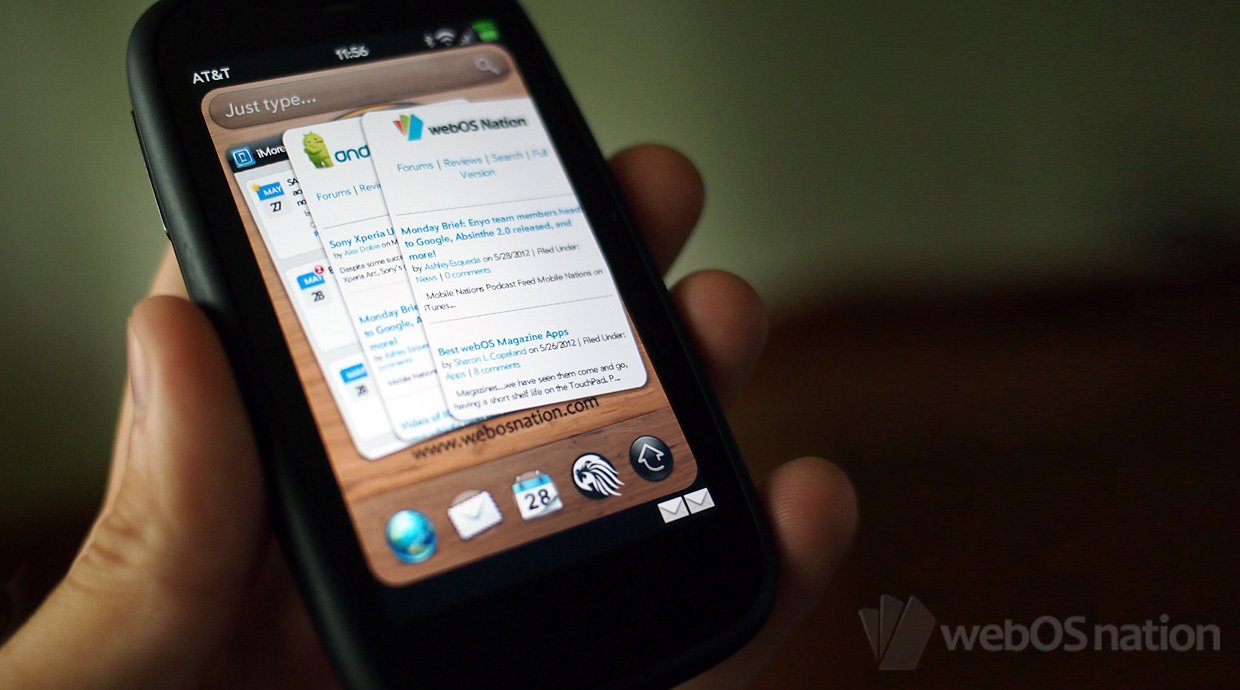
What we all know at this time so far about multitasking is that you can have cards of  the apps you have opened running on the background and also you can discard them at your will just swiping them out.

This was the first mobile multitasking way innovated by Palm when the company launched the first Palm Pre smartphone in 2009 at CES.

Today 2014 most of the mobile OS multitask as webOS does. webOS is now working on the new LG webOS Smart TVs just launched at CES 2014.

Before HP made webOS an Open Source software multitasking with webOS reached a new phase with STACKS cards that you can move and put over another card , but that was not all Palm webOS developers did, in HP the team continue working and arrived to a new extraordinary phase with webOS multitasking calling it MOCHI.


What is webOS redesigned MOCHI?

Expanded "cards" so that you could swap in multiple panes at once for multitasking.

Watch the video below to have a real idea of webOS MOCHI:


What enjoyjs developers say about MOCHI?

Mochi, a striking new design language that the webOS UX team had been working on for the next generation of webOS phones and tablets before everything abruptly and famously screeched to a halt.
In the transitional period before we were acquired by LG, our designers continued to work on Mochi. We worked closely with them, implementing many of the Mochi widgets in the form of a new UI library for Enyo 2 — but we had to put this work in progress on the shelf in early 2013 when we shifted our focus to TV and started pouring most of our energy intoMoonstone and Spotlight.


We don’t have any immediate plans to resume our Mochi work, we would be thrilled to see the community pick up where we left off. With that in mind, we showed Mochi off in an online hangout session in January, and since then — in our copious spare time — we’ve been working toward a public release. This work has included lining up community members to act as maintainers, fixing font licensing issues, and gathering up the internal design documents that would let our community developers understand the ideas behind the UI and see what’s yet to be implemented from the original vision.
Today, we’re pleased to announce that Mochi is now open source and available under the Apache 2.0 license, just like the rest of the Enyo source. The Mochi GitHub repo is now public, and we’ve started putting up some documentation in the Mochi wiki. Of particular note is our list of design documents which includes the PDFs and PNGs that were developed internally to guide Mochi’s development. Not only can this guide future work, but it shows just how much thought went into how these widgets work together. It also points to features that are yet to be implemented.
As maintainers for Mochi, we have two members of the webOS Ports community: Herman van Hazendonk (Herrie82) and Tom King (ka6sox). They will be handling reviewing pull requests and maintaining the code, with the Enyo team at LG providing guidance. Thanks, Herman and Tom, for stepping up!
It’s fun to have Mochi out in the open after all this time. Give it a spin, let us know what you think, and — if you’re so inclined — work with Herman and Tom to move it forward.


    If you want to get a closer look at Mochi, you can check out the new Wiki and the documentation full of assets the team created for the updated operating system. As well as images of tools like buttons and sliders, the documentation includes working samples, including a very fun multi-colored activity indicator. 

    We hope some day LG Electronics will embrace webOS Mochi for new smartphones and tablets, as well as the full webOS features package that was and is ahead of others mobile OS.

    Github Github

    via TheVerge

    Monday, January 30, 2012

    Europe: Fold-up car of the future unveiled. The Hiriko.

    WorldWide Tech & Science. Francisco De Jesús.


    A tiny revolutionary fold-up car designed in Spain's Basque country as the answer to urban stress and pollution was unveiled Jan. 24 before hitting European cities in 2013.

    The "Hiriko," the Basque word for "urban," is an electric two-seater with no doors whose motor is located in the wheels and which folds up like a child's collapsible buggy, or stroller, for easy parking.


    Dreamt up by Boston's MIT-Media lab, the concept was developed by a consortium of seven small Basque firms under the name Hiriko Driving Mobility, with a prototype unveiled by European Commission president Jose Manuel Barroso.


    Demonstrating for journalists, Barroso clambered in through the fold-up front windscreen of the 1.5-metre-long car.

    "European ideas usually are developed in the United States. This time an American idea is being made in Europe," consortium spokesman Gorka Espiau told AFP.

    Its makers are in talks with a number of European cities to assemble the tiny cars that can run 120 kilometers (75 miles) without a recharge and whose speed is electronically set to respect city limits.

    They envision it as a city-owned vehicle, up for hire like the fleets of bicycles available in many European cities, or put up for sale privately at around 12,500 euros.

    Several cities have shows interest, including Berlin, Barcelona, San Francisco and Hong Kong. Talks are under way with Paris, London, Boston, Dubai and Brussels.

    The vehicle's four wheels turn at right angles to facilitate sideways parking in tight spaces.


    The backers describe the "Hiriko" project as a "European social innovation initiative offering a systematic solution to major societal challenges: urban transportation, pollution and job creation."


    Enjoy a full pictures presentation of Hiriko:


    Tuesday, January 3, 2012

    Korea: A look at a UI gesture development for future flexible devices.

    WorldWide Tech & Science. Francisco De Jesús

    The Korean Kaist Institute KI for Information Technology Convergence is developing a based gesture UI for future flexible devices. The research goes deep in the user study of future interaction, modeling deformation based UI, recognizing flexible deformation and finally Implementation and Evaluation.

    Samsung and Nokia are the companies that are developing flexible phones concepts, as well.


    Development of Deformation Based Gesture Sensing/Feedback Interaction for Future Device
       - Design of deformation based gesture UI for future flexible device
       - Development of deformation recognition interface for future flexible device
       - Development of deformation based integrated input-output interface for future flexible device


    Source: ki itc

    Related post:

    Revolutionary: Samsung to bring up the Flexible Amoled Galaxy SKIN smartphone for Spring 2012, with Android Flexy OS.

    Tuesday, May 3, 2011

    Bicycles of the future. Video

    WorldWide Tech & Science. Francisco De Jesús.

    Forbes makes an interview to a US race bikes manufacturer specialized  in components and with 40 years of experience.

    Thursday, September 23, 2010

    Planes of the future will have unconventional shapes


    Charles Bolden, administrator of NASA, speaks at the Green Aviation Summit in Mountain View, Calif., outlining NASA's ongoing contribution to environmentally friendly aviation advances. Bolden focuses on the need for continued innovation, including different-looking planes, and describes a recent success story, the Chevron Nozzle, which is used in Boeing 787 and 747-8 planes and decreases noise pollution while improving fuel efficiency.

    LG OLED evo M5, the Only True Wireless OLED TV With G5’s Excellence in Picture Quality.

      With Uncompromised, Low-Lag Performance at 4K 144Hz, LG’s Advanced Wireless Technology Sets a New Standard for Clutter-Free Gaming and Hom...

    Popular Posts