Showing posts with label mobile. Show all posts

Monday, October 24, 2016

Samsung Rolls Out Industry’s First 8GB LPDDR4 DRAM Package for mobile.


Samsung Electronics, announced in October 20,2016 that it is introducing the industry’s first 8-gigabyte (GB) LPDDR4 (low power, double data rate 4) mobile DRAM package, which is expected to greatly improve mobile user experiences, especially for those using Ultra HD, large-screen devices. 

The 8GB mobile DRAM package utilizes four of the newest 16 gigabit (Gb) LPDDR4 memory chips and advanced 10-nanometer (nm)-class* process technology.

“The advent of our powerful 8GB mobile DRAM solution will enable more capable next-generation, flagship mobile devices around the world,” said Joo Sun Choi, executive vice president of Memory Sales and Marketing at Samsung Electronics. 

“We will continue to provide advanced memory solutions offering the highest values and leading-edge benefits to meet the escalating needs of devices having dual camera, 4K UHD and VR features.”

The new 8GB LPDDR4 operates at up to 4,266 megabits per second (Mbps), which is twice as fast as DDR4 DRAM for PCs working typically at 2,133 Mbps per pin. Assuming a 64 bit (x64) wide memory bus, this can be viewed as transmitting over 34GBs of data per second.

While many high-end ultra-slim note PCs use 8GB of DRAM currently, Samsung’s new 8GB LPDDR4 package will help other next-generation mobile devices take full advantage of its extremely high capacity. For example, equipping tablets with 8GB of LPDDR4 will enable virtual machine operation** and smoother 4K UHD video playback, popular features of many premium PCs.

The Samsung 8GB LPDDR4 DRAM provides much more efficient power consumption thanks to its use of the latest 10nm-class process technology and Samsung’s proprietary low-power circuit design. This circuit design enables the memory chip to double the capacity of the company’s 20nm-class 4GB DRAM package, while consuming approximately the same amount of power.

The 8GB LPDDR4 package has XYZ dimensions of under 15mm by 15mm by 1.0mm, which satisfies space requirements of most new, ultra slim mobile devices. Using a DRAM package thinner than 1.0mm enables stacking the package together with UFS memory or a mobile application processor, depending on device manufacturers’ preferences, which will allow further space savings on the printed circuit board.

In August last year, Samsung introduced the industry-first 20-nanometer 12Gb LPDDR4 DRAM. After only a 14-month development period, Samsung is now introducing the first 10nm-class 16Gb LPDDR4 DRAM and this single-package solution of 8GB LPDDR4 DRAM, which will speed up the launch of next-generation mobile devices with even more advanced performance.

Samsung will continue to rapidly expand production of its DRAM products based on 10nm-class process technology. The company has been manufacturing 10nm-class DRAM on a leading-edge fabrication line and plans to also use the 10nm-process technology in other fabs in the near future, to meet ever-increasing demands for advanced, high-density mobile DRAM.


*10nm-class is a process technology node somewhere between 10 nanometer and 20 nanometer, and 20nm-class is a process technology node somewhere between 20 nanometer and 30 nanometer.


**A virtual machine (VM) is an emulation of a computer system that provides the functionality of a physical computer. Virtual machines allow users to run multiple operating systems (OS) on a single PC.


Wednesday, February 24, 2016

MWC 2016: Powermat’s mobile engagement platform designed to drive repeat business.


Businesses use market-leading wireless charging technology to engage customers across multiple touch points.

Powermat Technologies today announced its market-leading wireless charging platform can help businesses of all sizes improve customer engagement and increase sales by providing them with the personalized marketing tools necessary to drive repeat business.  
Cloud connected charging spots make Powermat truly unique in the industry, as it's currently the only wireless charging platform on the market to offer businesses the opportunity to engage with customers across multiple touch points—before they’re in the store, while they’re in it, and after.
"Customers have deep connections with their phones, and an expectation of instant communication or immediate access to information has created a real fear of running out of battery," said Thorsten Heins, Chief Executive Officer of Powermat Technologies. 
"Powermat's mobile engagement solution alleviates this fear by offering a phone charging service that not only provides customers with power, but also provides businesses with the ability to attract, engage and service customers in a much more meaningful way."
Helping businesses become optimized for mobile, Powermat's engagement platform is a marketing tool through which businesses can send customized offers, tailored content and special rewards to customers in order to generate repeat business and increased revenue. Best of all, brick-and-mortar businesses can better understand their customers.
Once customers download the Powermat Mobile App, required to enable charging at participating  Powermat locations, businesses can use customizable, geo-targeted push-notifications to send information to a customer on-site, or to share offers and content when a customer is nearby. 
When customers lay their smartphone on a Powermat Charging Spot, businesses can then send them contextual messages such as special offers, surveys and in-store deals that help generate customer loyalty and even drive a second purchase.  Finally, businesses can bring customers back in store by running gratitude campaigns that, through push notifications, entice customers with loyalty points, rewards and other exciting promotions.   
Since Powermat’s mobile engagement platform is built on a cloud infrastructure with portals for each client, venues can also easily customize offers to match their customers’ specific needs. Businesses have the tools to analyze users of the service and marketing metrics. Additionally, venues can build campaign calendars and time their campaigns to a specific time of day and/or location, depending on peak periods at their store and/or the type of customer they’re trying to attract.
“E-commerce retailers have a rich knowledge of consumer preferences and buying habits due to the digital nature of their business, but traditional brick and mortar operators need and want help catching up,” said Carlo Chiarello, Chief Product Officer of Powermat Technologies. “Our engagement platform gives businesses the -customizable marketing tools they need to learn more about their customers and serve them better.”
Powermat technology helps businesses drive reoccurring revenue, and generate a solid return on investment on any wireless charging installation. In a recent online consumer survey conducted by Powermat, 4 out of 5 respondents said they’d frequent a venue with wireless charging at least once more per week. In addition, 86 percent said they’d spend more time at a store, and 56 percent said they’d spend more money while there.
As pioneers in the wireless charging industry, Powermat has attained a great deal of mass market installation experience over the past decade. Whether a business owner is opening a new location or retrofitting a store, Powermat has created a scalable process that’s seamless, and extremely efficient with almost no impact on daily operations.
Business owners considering wireless charging solutions should contact us at: https://www.powermat.com/contact/
Images and press material can be downloaded from: http://mwc.vporoom.com/Powermat 
-30-
About Powermat Technologies
Our vision is to help create a world where people never again need worry about running out of power. By equipping venues with a wireless charging infrastructure, Powermat’s platform allows businesses to increase relevant engagement with customers sending contextual information, alerts, offers and promotions through the Powermat app before, during and after on-site consumer interactions. Together with more than 100 partners, we are building a global wireless power ecosystem. A pioneer in cloud connected wireless charging infrastructure, we utilize existing principles of magnetic inductivity to wirelessly transfer electricity in a safe and effective manner. As founding members of the Power Matters Alliance (now AirFuel Alliance) we are dedicated to creating an industry standard for smart, environmental and accessible wireless power. Everyone should live life at 100%. For more information please visit www.powermat.com.

MEDIA CONTACT:

Amy McDowell
M: 519-500-2925

Saturday, January 9, 2016

Samsung foldable mobile screen for 2H 2016. Carrying Small Seeing Big. Pictured.


Samsung expected foldable smartphone did not arrive at CES 2016. However new sources are saying Samsung will just introduce it the second half of 2016 (2H 2016) as the SM-G929G model. (Project Valley)

A mass production of the device is not scheduled after the introduction yet.

At the Samsung Analyst Day 2013 Samsung did show an slide were the foldable mobiles are projected to be presented between 2016 to 2017:


On one of these slides from the 2013 Samsung Analyst Day keynote speakers, there is an image of how the foldable mobile might look like:


Quote from HSBC analysts:

"We think Samsung will likely introduce foldable OLED smartphones as early as 2H16, versus market expectations of 2017, as the company tries harder to regain market share.

In our view, foldable OLED smartphones could transform Samsung’s smartphone business, with the potential to become a ‘killer’ feature in the premium smartphone space given that (1) a foldable OLED model would provide it with a high degree of product differentiation;

(2) it gives users the best of both world’s – namely, a larger screen size in a smaller form factor;

and (3) it could enable the company to capture market share in both the smartphone and tablet markets with a single product.

The coming roll-out of foldable OLED smartphones also bodes well for growth across the entire OLED panel supply chain: from the panel makers to equipment makers to materials suppliers."

BI


Friday, June 19, 2015

ITU says 5G mobile is a 20Gbps speed network. Defines vision and roadmap for development.


The International Telecommunication Union (ITU) has agreed on the preliminary definitions for the future 5G standard for mobile networking. A conference in San Diego to decide on the future of the standard was held from June 10th to 18th, where a 12 member delegation sat to draw up the specifications.
In terms of data speeds, the group decided that 5G compliant networks will have to provide data speeds of up to 20Gbps (Gigabits per second), 20 times faster than the 1Gbps specification for 4G. In terms of what this means for actual user speeds, customers should receive speeds in the region of 100 to 1000 Mbps, depending on a number of factors. This is anywhere from a 10 to 100 fold increase over typical 4G speed of 10Mbps.
This big increase in data speeds and bandwidth is expected to open up access to higher resolution 4K video content and holographic technology via mobile networks.
The specification also caters for future internet-of-things technologies. 5G will have to be able to provide more than 100 Mbps average data transmission to over 1 million IoT device within a 1 square kilometre radius.
As for the formal naming scheme, 5G will be called IMT-2020. IMT-2000 was the name for 3G networks and IMT-Advanced for 4G. The group will begin looking for technologies to use for the standard soon.
Korean telecommunications company KT recently unveiled its own 1.17Gbps network, which aims to bridge the gap between 4G and 5G. Its GiGA LTE network makes use of LTE and WiFi broadband network hotspots to offer faster speeds to consumers and this was an ITU consideration to help nations meet the higher bandwidth requirements of 5G. Korea is leading the way with development of 5G technologies and has had a large input into definiting the standard.
The final details for the 5G standard will be confirmed in October, following approval from the 193 ITU member countries. International spectrum for the 5G network should begin distribution in 2019, with commercialized implementations expected sometime in 2020. Although we will be treated to an early demonstration of 5G technology at the 2018 PyeongChang Winter Olympic Games.
Ongoing information on the development of IMT-2020 will be available here.
Press Release:

ITU defines vision and roadmap for 5G mobile development

Future mobile technologies usher in new paradigms for connected society

Geneva, 19 June 2015 – ITU has established the overall roadmap for the development of 5G mobile and defined the term it will apply to it as “IMT-2020”.
With the finalization of its work on the “Vision” for 5G systems at a meeting of ITU-R Working Party 5D in San Diego, California, ITU has now defined the overall goals, process and timeline for the development of 5G mobile systems. This process is now well underway within ITU, in close collaboration with governments and the global mobile industry.
The meeting also agreed that the work should be conducted under the name of IMT-2020, as an extension of the ITU’s existing family of global standards for International Mobile Telecommunication systems (IMT-2000 and IMT-Advanced) which serve as the basis for all of today’s 3G and 4G mobile systems.
The next step is to establish detailed technical performance requirements for the radio systems to support 5G, taking into account the needs of a wide portfolio of future scenarios and use cases, and then to specify the evaluation criteria for assessment of candidate radio interface technologies to join the IMT-2020 family. These new systems, set to become available in 2020, will usher in new paradigms in connectivity in mobile broadband wireless systems to support, for example, extremely high definition video services, real time low latency applications and the expanding realm of the Internet of Things (IoT).
The ITU-R Radiocommunication Assembly, which meets in October 2015, is expected to formally adopt the term “IMT-2020”.
“The buzz in the industry on future steps in mobile technology – 5G – has seen a sharp increase, with attention now focused on enabling a seamlessly connected society in the 2020 timeframe and beyond that brings together people along with things, data, applications, transport systems and cities in a smart networked communications environment,” said ITU Secretary-General Houlin Zhao. “ITU will continue its partnership with the global mobile industry and governmental bodies to bring IMT-2020 to realization.”
Ongoing information on the development of IMT-2020 will be available here.


Tuesday, September 30, 2014

3 Companies are making the mobile WiFi wireless charging possible.


Energous, , uBeam and WiTricity from the USA are on the way to offer consumer products of Wireless Router capable to send power to charge your mobile.

Computerworld have made a long research about what these 3 companies have on track for this new technology, that could come up available for consumers in 2015.

Lets`take a read of each way of transfering power wireless, by Company:

Energous from California:


Rizzone, CEO of Energous, is pitching a wireless charging technology called WattUp that can send power in a 15-ft. radius using radio frequency transmissions.
The Pleasanton, Calif.-based company, which raised nearly $25 million when it went public this year, plans to have consumer products out by Thanksgiving 2015.
So what is it?
The WattUp transmitter works much like a wireless router, sending radio frequency signals that can be received by enabled mobile devices, such as wearables and mobile phones. A small RF antenna in the form of PCB board, an ASIC and software make up the wireless power receivers.
The Bluetooth wireless communication specification is used between WattUp transmitters and receivers.
Because the amount of wattage WattUp can send is limited, Energous is focused on powering small mobile devices rather than laptops or batteries that require higher capacities.
A single WattUp transmitter can charge up to 24 devices, all under software control that enables or disables charging. The maximum amount of power -- 4 watts -- can only be delivered to four devices simultaneously. So as more enabled and "authorized" devices enter a room, the charge to each device is reduced.

Also, as the distance between transmitter and receiver becomes greater, the power transfer dissipates. For example, a WattUp transmitter can stream 4 watts within a 5-ft. radius. At a range of 5 to 10 feet, that power drops to 2 watts per device; at 10 to 15 feet, the router puts out 1 watt per device (4 watts total). 
George Holmes, vice president of sales and marketing at Energous, said that within 5 feet a mobile device can be charged at the same rate as if it were plugged into a wall socket.
WattUp's RF transmission, which operates at 5.7MHz and 5.8MHz, is referred to in the industry as "far-field" wireless charging. Energous is not the first company to come up with the idea.
Startup uBeam landed $750,000 in seed funding for technology that uses ultrasound waves to transmit electricity to mobile devices. The specifics may differ, but the principle is similar to the approach Energous has taken, according to Ryan Sanderson, an analyst at IHS.
Wireless charging over distance is nothing new, but most other technologies use magnetic resonance to achieve power transfers at relatively short distances. For example, WiTricity has been licensing its charging technology for use in appliances and the automotive industry.
WiTricity's technology can transmit power between two copper coils that form a magnetic field. But distances from hand-size transmitters have typically been limited to a foot or so. Devices called "repeaters" can extend that distance, but generally speaking, the larger the coil, the longer the distance.
Sanderson does not consider WiTricity's technology far-field charging. "Magnetic resonance is near-field wireless charging, no matter how you spin it," he said.
Loosely coupled magnetic resonance technology, offered by Duracell and other manufacturers, enables wireless charging pads that can power up multiple devices at the same time -- as long as they're all placed on the charging surface. That, Sanderson said, is the main problem with magnetic resonance wireless charging: You have to put your mobile device down somewhere in order to charge them.
"Those technologies really don't support the notion of mobility," Holmes said. "Mobility is the idea of walking around an office or home and having your device charge passively rather than actively.
  
"We're not wireless but wire-free," he added.
Nick Spencer, a senior director at ABI Research, said the primary concern government regulators will likely have with wireless charging technology is that it could potentially waste electricity. On average, 40% of the electricity sent from a utility's grid into a home is wasted as it moves through various transformers. That loss is greater with wireless charging systems.
Most magnetic resonance wireless charging devices have an efficiency rating of between and 80% and 90%, meaning up to 20% of the electricity is lost in transmission.
Still, Sanderson and Spencer believe Energous' WattUp technology has massive potential.

Big market appeal

Technology like WiTricity's is already expected to make up the lion's share of the market someday, because it's relatively easy to use.
According to Pike Research, the revenue worldwide from wireless power devices will exceed $15 billion by 2020, and systems based on highly resonant magnetic wireless power transfer will account for more than 80% of the overall market.
"I see huge potential for [Energous' technology] as long as it can be proven to work," Sanderson said. "We're seeing a huge increase in wearables. And the key thing about wearables is that if you have to take them off every day, it becomes a pain. From a consumer point of view, that will be the one thing that makes or breaks that industry."
  
According to a recent study by IHS, 69% of consumers still don't know or understand what wireless charging is. When people think of "wireless," they don't picture the charging pads of today that use magnetic resonance technology.
"What they often conjure up in their minds is a system like Wi-Fi," Sanderson said.
That same IHS study revealed that 78% of consumers would purchase a wireless charging accessory and 38% would pay to charge their mobile devices wirelessly in a public place.

Product partnerships

Energous has been securing partnerships with Tier 2 suppliers, the companies that sell parts to big manufacturers like automobile and smartphone makers.
For example, Energous is working with Dialog Semiconductor, a German company that makes integrated circuits for audio and display processing used mainly in mobile phones and the automotive industry. Japan-based Dong-Hwa, one of the world's largest mobile equipment suppliers, is also working to embed WattUp wire-free charging receivers in smartphone cases
Energous has also partnered with rechargeable battery makers such as Highpower International, and is developing reference designs for WattUp-enabled batteries. Holmes sees a day when common objects in a house will have WattUp wireless charging routers embedded in them -- everything from refrigerators, televisions and even picture frames. The company is also working on a smaller charger (less than a 1-watt charge) that people could place on nightstands to charge wearables as they sleep without having to take them off.
"We decided to go after the low-hanging fruit first. The quickest way to get visibility to the consumer is through enabling battery packs and wearables," Rizzone said.
While Energous has created prototype wireless power routers and receivers, it doesn't plan on selling hardware. Like other wireless power companies, it is licensing its intellectual property for other companies to build into products.
The company plans to demonstrate the first iteration of its product and enabled mobile devices at the Consumer Electronics Show in Las Vegas in January.
"With our solution, you can continue to wear your device 24/7. Your watch will be topped off at night, and that's a significant difference from what Apple offered with its watch this week," Rizzone said.


Samsung Galaxy Note 4 Unlocked


Tuesday, April 8, 2014

webOS MOCHI hints the future of mobile MULTITASKING. Now is Open Source.

Francisco De Jesùs.


webOS MOCHI hints the future of mobile MULTITASKING. Now is Open Source.

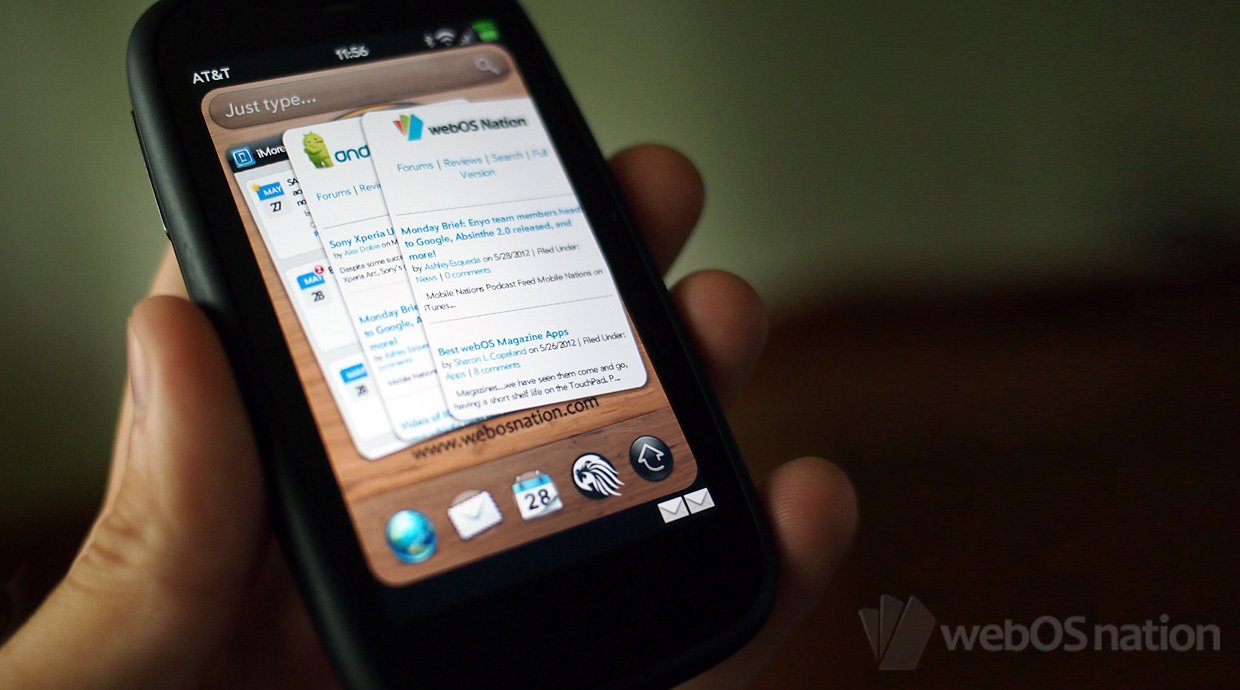
What we all know at this time so far about multitasking is that you can have cards of  the apps you have opened running on the background and also you can discard them at your will just swiping them out.

This was the first mobile multitasking way innovated by Palm when the company launched the first Palm Pre smartphone in 2009 at CES.

Today 2014 most of the mobile OS multitask as webOS does. webOS is now working on the new LG webOS Smart TVs just launched at CES 2014.

Before HP made webOS an Open Source software multitasking with webOS reached a new phase with STACKS cards that you can move and put over another card , but that was not all Palm webOS developers did, in HP the team continue working and arrived to a new extraordinary phase with webOS multitasking calling it MOCHI.


What is webOS redesigned MOCHI?

Expanded "cards" so that you could swap in multiple panes at once for multitasking.

Watch the video below to have a real idea of webOS MOCHI:


What enjoyjs developers say about MOCHI?

Mochi, a striking new design language that the webOS UX team had been working on for the next generation of webOS phones and tablets before everything abruptly and famously screeched to a halt.
In the transitional period before we were acquired by LG, our designers continued to work on Mochi. We worked closely with them, implementing many of the Mochi widgets in the form of a new UI library for Enyo 2 — but we had to put this work in progress on the shelf in early 2013 when we shifted our focus to TV and started pouring most of our energy intoMoonstone and Spotlight.


We don’t have any immediate plans to resume our Mochi work, we would be thrilled to see the community pick up where we left off. With that in mind, we showed Mochi off in an online hangout session in January, and since then — in our copious spare time — we’ve been working toward a public release. This work has included lining up community members to act as maintainers, fixing font licensing issues, and gathering up the internal design documents that would let our community developers understand the ideas behind the UI and see what’s yet to be implemented from the original vision.
Today, we’re pleased to announce that Mochi is now open source and available under the Apache 2.0 license, just like the rest of the Enyo source. The Mochi GitHub repo is now public, and we’ve started putting up some documentation in the Mochi wiki. Of particular note is our list of design documents which includes the PDFs and PNGs that were developed internally to guide Mochi’s development. Not only can this guide future work, but it shows just how much thought went into how these widgets work together. It also points to features that are yet to be implemented.
As maintainers for Mochi, we have two members of the webOS Ports community: Herman van Hazendonk (Herrie82) and Tom King (ka6sox). They will be handling reviewing pull requests and maintaining the code, with the Enyo team at LG providing guidance. Thanks, Herman and Tom, for stepping up!
It’s fun to have Mochi out in the open after all this time. Give it a spin, let us know what you think, and — if you’re so inclined — work with Herman and Tom to move it forward.


    If you want to get a closer look at Mochi, you can check out the new Wiki and the documentation full of assets the team created for the updated operating system. As well as images of tools like buttons and sliders, the documentation includes working samples, including a very fun multi-colored activity indicator

    We hope some day LG Electronics will embrace webOS Mochi for new smartphones and tablets, as well as the full webOS features package that was and is ahead of others mobile OS.

    Github Github

    via TheVerge

    Friday, February 21, 2014

    INTEL in Health: Mobility at the Point of Care—Tablets in the Operating Room. Video.

    Francisco De Jesùs.


    It`s good to see how  times have changed , from filling  a lot of papers and information about a patient and having big storages of files concerning health, progress, operations and everything related to them , is now simple with the help of mobile devices like tablets  you can have all on it and be sent anywhere around a hospital where it needs to go.

    Technology efficiency in Health care is a number one priority in any circunstance and mobile devices manufacturers must go that way besides the social and fun services of them.

    Intel says:

    See how the delivery of healthcare services improves via mobile communication devices in the hospital setting. Find out more information and read the latest blog posts on health IT and mobility in the Intel Health and Life Sciences Community: http://communities.intel.com/communit....


    Enhanced by Zemanta

    Monday, February 10, 2014

    MobilityShield reveals new solution for Secure Mobile Sharepoint Connectivity.

    MobilityShield reveals new solution for Secure Mobile Sharepoint Connectivity.

    Francisco De Jesùs.


    MobilityShield, an innovative solution that guarantees secure mobile connectivity, today launched SharePointShield, a new product that guarantees secure mobile connectivity for users of Microsoft SharePoint.

    The innovative SharePointShield was developed following the successful launch of LyncShield which enables users to safely use approved mobile devices outside the corporate network to connect through Microsoft Lync.

    The new solution protects organizations that use SharePoint against Active Directory credentials theft, block DoS, DDoS and brute-force attacks, and enforces connection to registered devices.

    "The need to connect smartphones to the corporate network has become a vital business requirement," said Guy Eldan, CEO of AGAT Software Solutions, which developed MobilityShield. "Mobile enterprises require easy-to-deploy tools to protect their sensitive business data. They are looking for solutions that enable secure connectivity of personal mobile devices with corporate SharePoint servers."

    While most mobile security solutions focus on protecting the data stored on the mobile device through encryption strategies and containerization, SharePointShield offers a new approach. It eliminates the need to store Active Directory passwords on the device and the connection to SharePoint is made by using dedicated SharePoint credentials that are created by the user rather than the regular network Active Directory credentials.

    SharePointShield interacts directly with client-server SharePoint traffic and effectively controls who connects to the network based on the device used and not only on credentials.

    SharePointShield offers the following features:
    • Active Directory password protection
    • Blocks Dos, DDoS and brute-force attacks
    • Smart Card policy solution for mobile
    • Two-factor authentication for specific third-party clients
    • No need for additional client installment
    • Ideal BYOD solution
    The solution, which can be easily installed and integrated, is available either as an add-on to Microsoft Forefront (ISA/TMG) or on a dedicated reverse proxy (AGAT's Bastion) on Windows or Linux.
    By using SharePointShield the organization can determine which mobile devices will be granted access to the system.

    About AGAT Software Solutions
    AGAT is a development company specializing in security applications and digital signature solutions.
    AGAT's client base comprises government offices, banks and insurance companies, including Fortune 500 companies.

    For more information, visit http://mobility-shield.com. For news and updates, please follow us on Twitter, LinkedIn and Facebook.


    Company contact
    Guy Eldan
    CEO
    AGAT Software Solutions
    Mobile: +972-523675031


    SOURCE AGAT Software Solutions.

    Best Selling CHROMEBOOKS on Amazon store:

    Enhanced by Zemanta

    Sunday, December 29, 2013

    Samsung Electronics Co. and SK hynix Inc. claimed made the World’s First Next Generation Mobile Memory Low Power DDR4.

    WorldWide Tech & Science. Francisco De Jesùs.


    Both Samsung Electronics Co. and SK hynix Inc. claimed Monday to have developed the next-generation mobile DRAM (dynamic random access memory) chip with twice-as-fast speed than the existing model.
    Dubbed the new LPDDR4 (Low Power DDR4), the product is the industry's first eight-gigabit memory chip using 20 nanometer technology with a speed of 3,200 megabits per second (Mbps), two times faster than the 1,600 Mbps of its predecessor LPDDR3, the companies said.
    The two South Korean tech giants each claimed that they have developed the world's first LPDDR 4 on Thursday.

    The latest DRAM chip can run on a relatively small power of 1.1 volts, lower than the 1.2 volts of the existing LPDDR3, they said.

    Its mass production will start in the second half of 2014.

    Samsung, the world's largest manufacturer of computer memory chips, said it will focus on the premium mobile devices and ultra-slim notebooks with the new chip.

    SK hynix said the new mobile DRAM will be applied in flagship mobile devices starting next year and gradually expand its presence to become the industry's leading product by 2016.

    "The company will further strengthen its competitiveness in the mobile area with the development of high density, ultrahigh speed and low power consuming products," it said. 


    Below you can find both companies individual Press Releases. Samsung was published by BusinessWire on Dec 29,2013, and SK Hynix themselves on Dec 30, 2013.


    Press Release:


    Samsung Develops Industry’s First 8Gb LPDDR4 Mobile DRAM

    Ushering in the next-generation of ultra-fast mobile memory to meet growing market demand

    Samsung Electronics Co., Ltd., the world leader in advanced memory technology, announced today that it has developed the industry’s first eight gigabit (Gb), low power double data rate 4 (LPDDR4), mobile DRAM.


    “This next-generation LPDDR4 DRAM will contribute significantly to faster growth of the global mobile DRAM market, which will soon comprise the largest share of the entire DRAM market,” said Young-Hyun Jun, executive vice president, memory sales & marketing, Samsung Electronics. “We will continue introducing the most advanced mobile DRAM one step ahead of the rest of the industry so that global OEMs can launch innovative mobile devices with exceptional user convenience in the timeliest manner.”
    Samsung’s new high-speed 8Gb LPDDR4 mobile DRAM will provide the highest level of density, performance and energy efficiency for mobile memory applications, enabling end users to have faster, more responsive applications, more advanced features, and higher resolution displays while maximizing battery life.
    The 8Gb LPDDR4 is fabricated on 20-nanometer (nm) class* process technology, and offers 1 gigabyte (GB) on a single die, which is the largest density available for DRAM components today. With four of the 8Gb chips, a single 4GB LPDDR4 package can provide the highest level of performance available today.
    In addition, Samsung’s new 8Gb LPDDR4 uses a Low Voltage Swing Terminated Logic (LVSTL) I/O interface, which was originally proposed by Samsung to JEDEC and has become a standard specification for LPDDR4 DRAM. Based on this new interface, the LPDDR4 chip will enable a data transfer rate per pin of 3,200 megabits per second (Mbps), which is twice that of the 20nm-class LPDDR3 DRAM now in mass production. Overall, the new LPDDR4 interface will provide 50 percent higher performance than the fastest LPDDR3 or DDR3 memory. Also, it consumes approximately 40 percent less energy at 1.1 volts.
    With the new chip, Samsung will focus on the premium mobile market including large screen UHD smartphones, tablets and ultra-slim notebooks that offer four times the resolution of full-HD imaging, and also on high-performance network systems.
    Samsung is leading mobile DRAM technology development and is the leader in mobile DRAM market share with its 4Gb and 6Gb LPDDR3. It started offering the thinnest and smallest 3GB LPDDR3 (6Gb) package solutions in November and will provide its new 8Gb LPDDR4 DRAM in 2014. The 8Gb mobile DRAM chip will rapidly expand the market for high-density DRAM in next-generation mobile devices.
    About Samsung Electronics Co., Ltd.
    Samsung Electronics Co., Ltd. is a global leader in technology, opening new possibilities for people everywhere. Through relentless innovation and discovery, we are transforming the worlds of televisions, smartphones, personal computers, printers, cameras, home appliances, LTE systems, medical devices, semiconductors and LED solutions. We employ 270,000 people across 79 countries with annual sales of US$187.8 billion. To discover more, please visit www.samsung.com.
    * Editors’ Note: 20nm-class means a process technology node somewhere between 20 and 30 nanometers

    Contacts

    Samsung Semiconductor
    John Lucas, APR, 408-544-4363

    Press Release:

    SK Hynix Developed the World’s First Next Generation Mobile Memory LPDDR4

    SK Hynix Inc. (or ‘the Company’, www.skhynix.com) announced that it has developed the world’s first 8Gb(Gigabit) LPDDR4(Low Power DDR4) using its advanced 20nm class technology. LPDDR4 is the next generation mobile DRAM interface on the process of standardization which features ultrahigh speed and low power consumption.

    This new product works at 3200Mbps and ultra low-voltage of 1.1V which runs two times faster than 1600Mbps and does at lower voltage than 1.2V of existing LPDDR3. The Company has been strengthening its cooperation with the customers for the standardization of this new mobile DRAM by providing the samples of LPDDR4 to major customers and SoC(System on Chip) companies.

    Especially, SK Hynix is to continuously maintain its technology leadership in the mobile market by developing the world’s first 8Gb LPDDR4 following the development of the world’s first 8Gb and 6Gb LPDDR3. The Company plans to start mass production of it from the second half of next year.

    “SK Hynix secured its technology leadership by developing the world’s first next generation mobile memory LPDDR4 and providing samples of the product to the customers” said Senior Vice President Richard Chin, the Head of Global Sales Marketing. “The Company will further strengthen its competitiveness in the mobile area with the development of high density, ultrahigh speed and low power consuming products” he added.

    The new interface LPDDR4 is expected to be loaded onto flagship mobile devices at the end of 2014 and is anticipated to be commercialized regularly from 2015. Plus, it is expected to be the main product in the industry from 2016.


    About SK Hynix Inc.
    SK Hynix Inc., headquartered in Korea, is the world’s top tier semiconductor supplier offering Dynamic Random Access Memory chips (“DRAM”), Flash memory chips ("NAND Flash") and CMOS Image Sensors ("CIS") for a wide range of distinguished customers globally. The Company’s shares are traded on the Korea Exchange, and the Global Depository shares are listed on the Luxemburg Stock Exchange. Further information about SK Hynix is available at www.skhynix.com.

    Media Contact
    SK Hynix Inc.
    Public Relations
    Assistant Manager
    Heeyoung Son
    Phone: +82.2.3459.5316
    E-Mail: heeyoung.son@sk.com

    Amazon Kindles Fire HDX 7 and HDX 8.9 inches tablets


    Enhanced by Zemanta

    LG OLED evo M5, the Only True Wireless OLED TV With G5’s Excellence in Picture Quality.

      With Uncompromised, Low-Lag Performance at 4K 144Hz, LG’s Advanced Wireless Technology Sets a New Standard for Clutter-Free Gaming and Hom...

    Popular Posts