Showing posts with label sharp. Show all posts

Monday, October 10, 2016

Japan: SHARP may introduce its entry-level and mid-range smartphones with Foxconn products.


Foxconn Electronics is expected to introduce its entry-level and mid-range smartphones into the Japan market through its subsidiary Sharp in the first quarter of 2017.

However, it remains unclear as to which brand Foxconn will use to market the smartphones it produced in-house in the Japan market,  adding that it is highly possible those smartphones will be sold under the Sharp brand.

Although Sharp's Aquos family products have a significant presence in the high-end segment of Japan's smartphone market, the Japanese vendor lacks entry-level to mid-range models, noting that the adding of Foxconn's products will enrich Sharp's product portfolios.

Thursday, April 7, 2016

Japan: SHARP develops bendable OLED panel. Could be used in smartphones.


Sharp has created a flexible OLED panel that could be used in smartphone screens and a host of other applications.

The new panel can be freely bent not just during smartphone manufacturing but also by users. Sharp developed a prototype at its facility in Tenri, Nara Prefecture. The prototype has a 3.4-inch screen -- smaller than that of a typical smartphone -- and utilizes the company's IGZO (indium-gallium-zinc oxide) energy-saving panel technology.

The Osaka-based electronics company has previously developed curved LCD panels for vehicle-mounted equipment. It also anticipates demand for bendable OLED panels, which produce sharp images while consuming little power.

Sharp plans to pour 200 billion yen ($1.84 billion) into the OLED business over four years using money it will receive from Taiwan's Hon Hai Precision Industry, known as Foxconn, which has agreed to buy the struggling Japanese company. It is working to strengthen that business and is hurrying to develop proprietary technology with the aim of winning orders from smartphone makers such as Apple, in addition to cultivating various other applications.

Wednesday, February 5, 2014

Samsung tops, NEC and LG following in Large Format Display Market.


South Korea’s tech giant Samsung Electronics Co. became the top maker of Large Format Displays for the fifth consecutive year in 2013.

Samsung had 26.3 percent of the world’s LFD market through the third quarter of 2013, more than double the 10.4 percent posted by No. 2 player NEC Display Solutions Ltd. from Japan, the data compiled by DisplaySearch showed.

LG Electronics Inc., Samsung’s smaller South Korean rival, accounted for 5.8 percent over the cited period, trailed by Sharp Corp. and Philips with 4 percent and 2.5 percent, respectively.

LFD refers to panels used for digital signage for advertisements and any product requiring visual effects such as menu boards at restaurants and interactive whiteboards used at offices.

The combined shipment of LFDs came to 2.2 million units for entire 2013, edging up from the 2.15 million tallied in 2012, the researcher said, adding the figure is expected to advance 17 percent to reach 2.5 million units this year.

DisplaySearch said the shipment of LFDs will likely expand to 3.4 million units and 4 million units in 2015 and 2016, respectively. 

The size of the world’s LFD market is estimated at $4.4 billion this year, up 20 percent from $3.7 billion tallied in 2013, it added.


CHROMEBOOKS:


Enhanced by Zemanta

Monday, November 26, 2012

Japan: NTT Docomo to launch worlds first smartphone with Sharp`s liquid cristal IGZO display.


WorldWide Tech & Science. Francisco De Jesùs.

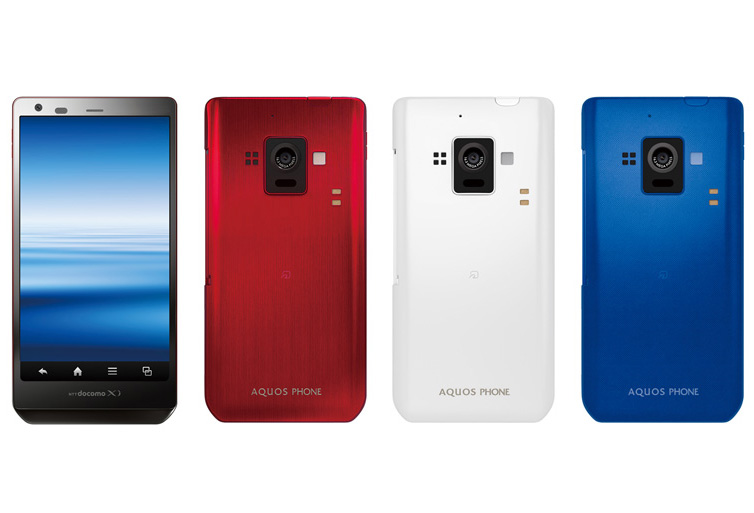
AQUOS PHONE ZETA SH-02E
Japan: NTT Docomo to launch worlds first smartphone with Sharp`s liquid cristal IGZO display.

NTT Docomo from Japan will launch  in November 29th, 2012, the 

AQUOS PHONE ZETA SH-02E 

the worlds first  smartphone with a Sharp liquid cristal IGZO HD display  720 × 1,280 dots type LCD Size 4.9, also supports pen input taking advantage of a high degree of recognition accuracy and responsiveness of the touch panel is a feature of the IGZO., the device sports a APQ8064 1.5GHz (Quad Core) chip, 2GB of RAM, Android 4.0, 3G and LTE,  Enjoy handwriting input. 3 colors: Red / White / Blue.

 Battery capacity is 2,320 mAh, standby time of approximately 350 hours (LTE) / 380 time (3G). Referred to as "safe to use without having to worry about the battery." Also has a waterproof performance equivalent IPX5 / 8.   ROM 32GB,  also has a microSD card slot.

Equipped with a CMOS sensor and image processing engine ProPix backside illumination pixels 16.3 million, main camera also employs optical image stabilization.Corresponds to the fast start-up of 16 times digital zoom and 0.4 seconds. Corresponding to the Bluetooth 4.0 and NFC. In addition, as well as the corresponding NOTTV, also infrared communication Wallet / seg / us. Also supports DLNA / DTCP-IP.

Support up to approximately 100Mbps downlink and up to about 37.5Mbps uplink (LTE) Xi. Equipped with a wireless LAN, Wi-Fi tethering corresponding to (number ten concurrent connections). 440 minutes of continuous viewing time NOTTV. The dimensions are approximately 135 × 68 × 9.8mm (thickness × width × height) and weighs about 150g.


Logo image of IGZO


AQUOS PHONE ZETA SH-02E

Bright big screen in the palm of your hand! Used for a long period of time in high-capacity 2320mAh battery and with the new generation 4.9 inches display.


Even when a stationary image, and the liquid crystal far smartphone CPU is running 60 times per second in order to maintain the display. In IGZO, as fuel-efficient technology of the car engine to stop the car stopped, while still picture display will stop the display unit of the CPU, it will only work once per second also was only the liquid crystal. Dramatically reduce the consumption of the battery This makes it can be used for a long time.

Logo image of Pro Pix 

16.3 million-pixel high-end camera with optical image stabilization and Startup "quick" "no" clean "" shake


High-resolution still image shooting maximum size of 16M (4640 × 3480 pixels) is possible. The adoption of a back-illuminated CMOS sensor to capture light efficiently, the brightness, you can enjoy authentic quality shooting in a dark room.

1.5GHz quad-core CPU & UI of enhancement of performance and energy efficiency overwhelming

1.5GHz quad-core CPU with a state-of-the-art in the industry. Such as adjusting the number of (core) engine, to achieve optimum operating lean with consideration to energy saving, depending on the application required.
Sources: NTTDocomo and av.watch

Wednesday, November 21, 2012

Sharp updates the Cocorobo line of intelligent robot vacuum cleaners.


WorldWide Tech & Science. Francisco De Jesùs.


Sharp updates the Cocorobo line of  intelligent robot vacuum cleaners.


Sharp have updated their Cocorobo line of intelligent robot vacuum cleaners, with a new smaller model, as well as a Cocorobo Navi function, which allows the robot to be controlled when the user is outside the home.

Cocorobo Navi can be used to visually map out your house creating a floor plan, letting the robot know where objects are placed, so you can directly specify where the robot should go.

Sharp also unveiled a controller, which connects to the Cocorobo via it's USB port, and can be used to control a range of household devices. Currently, Sharp TVs, air conditioning systems, LED lights and their Slim Ion Fan can all be controlled via the smartphone app, with support for competing companies products to be rolled out in future updates.

The new, smaller Cocorobo, the RX-V60, is 29.9cm in diameter, 4.7cm less than the current model, but with similar performance.

It features the power vacuum system, which can suck up dust from the gaps in wood floors, and due to it's reduced size, can comfortably maneuver around small spaces such as in between the legs of dining room chairs.

It will go on sale in Japan on the 13th of December for approximately 75,000 yen (US$900) and Sharp will manufacture 8,000 units per month. 

Sunday, September 23, 2012

Apple cuts LCD panels supply from Samsung. Goes with LG for next iPads and Sharp.


WorldWide Tech & Science. Francisco De Jesùs.

Original post from Korea Times:

Apple cuts LCD panels supply from Samsung. Goes with LG for next iPads, and Sharp.
Apple has reduced purchases of liquid crystal display (LCD) panels for tablet computers from Samsung Display amid the deepening patent disputes, said a leading market research firm, Friday. Market experts said that the move is aimed at minimizing its reliance on Samsung parts

An analysis by DisplaySearch showed Apple bought 683,000 display sheets for use in its 9.7-inch iPad tablet from Samsung Display in August this year ― a cut by nearly 50 percent from a month earlier. 9.7-inch displays are only being used in Apple iPads.

In May, Samsung Display shipped 2.88 million sheets to Apple, which was a monthly record. But the shipments were down to 1.22 million in July from 2.5 million that Samsung sold to Apple in June, according to the research firm.

Last year, the Cupertino-headquartered Apple spent about $7.8 billion on components from Samsung Electronics, mostly on application processors, memory chips and LCD screens. But Apple had begun turning to other suppliers in Japan, Taiwan and other Korean LCD and chipmakers such as LG Display and SK hynix as for the alternatives.

``This is the first time that Samsung Display shipped less than 1 million displays on a monthly basis since November last year. But we aren’t too worried,’’ said a senior Samsung official.

In a meeting with local reporters Wednesday, Samsung’s chip business chief Jun Dong-soo said that the company ``won’t be aggressive’’ in terms of investment for facilities next year due to lingering external uncertainties.

``We are facing uncertainties. That means Samsung isn’t prepared to continuously increase facility investment,’’ said Jun.

While Samsung is losing Apple’s business, its biggest cross-town rival LG Display is winning more orders from Apple.

In August, Apple bought 3.83 million display sheets from LG for use in iPads from 3.4 million sheets in July. In March this year, LG just sold 886,000 screens for iPads, however, the monthly shipments were increasing to 2 million, 2.55 million and 3.39 million in April, May and June, according to DisplaySearch.

Gary Sohn, the head of LG Display’s public relations office, declined to talk more about its Apple business.

``Apple has shifted its display supplement channels to LG and Sharp of Japan. LG Display solved quality-related matters for Apple products. Its `Apple line’ located in Paju is running at full capacity,’’ said an industry executive.

Shinhan Financial, a local brokerage, raised its target on LG Display shares to 38,000 won from 32,000 won. ``LG Display will report over 1 trillion won in operating profit this year because it’s been shipping more screens to Apple’s flagship products,’’ said So Hyun-chul from Shinhan.

The analyst said the Apple iPhone 5 is using LG screens, while Apple contracted with LG to buy big chunks of displays for use in its next iPad ― tentatively named the iPad 3 ― and mini iPad.

Apple products such as the iPad, and iPhone continue to stress the display supply chain, given their cutting-edge performance specifications and strict quality control. Apple business is attractive to the display supply chain because it offers high volumes of a single model, which enables production stability.

Apple displays offer higher average selling prices (ASPs) due to specifications such as slim width, light weight, high resolution, low power consumption, high color saturation and wide viewing angle.

``The display supply chain has started to gear up for Apple. In the second half of 2012, Apple will launch three new products _ iPhone 5, iPad Mini and New iPad model. These mobile devices will require displays with high resolution, slim form factor, light weight and low power consumption. And certainly, these features are keeping the display supply chain very busy,’’ DisplaySearch said.

``This is the story for all leading display makers but Samsung,’’ said another industry executive.


Monday, June 4, 2012

Cocorobo intelligent vacuum cleaner robot communicates with its owner


WorldWide Tech & Science. Francisco De Jesùs.


Cocorobo intelligent vacuum cleaner robot communicates with its owner.


It is a vacuum cleaner developed by Sharp from Japan and can communicate with the user with voice  and using your iphone or android smartphone.


Monday, April 16, 2012

Sharp Begins Production of World's First LCD Panels Incorporating IGZO Oxide Semiconductors.

WorldWide Tech & Science. Francisco De Jesús.


Sharp Begins Production of World's First LCD Panels Incorporating IGZO Oxide Semiconductors


In March 2012 at Kameyama Plant No. 2, Sharp began producing the world's first high-performance LCD panels incorporating IGZO oxide semiconductors. Sharp is expanding production scale through April to meet market demand.

Kameyama Plant No. 2 first started operations in August 2006, manufacturing highly advanced LCD panels for TVs. Production systems have subsequently been reorganized to focus on producing small- and medium-sized LCD panels for the world's rapidly growing smartphone and tablet terminal markets.

Employing advanced IGZO oxide semiconductors enables Sharp to produce LCDs with smaller thin-film transistors and increased pixel transparency, thus allowing for lower energy consumption. In addition, proprietary UV2A*3 photo-alignment technology employed in Sharp's AQUOS LCD TVs enables these displays to achieve high image quality.

Sharp will encourage the application of its new high-resolution LCD panels to high-definition notebook PCs and LCD monitors-which are both expected to grow in demand-as well as to mobile devices. Sharp will also contribute to creating markets for attractive new products.
Sample Specifications of LCD Panels Incorporating IGZO

For LCD Monitors Display size 32 inches
No. of pixels 3,840 x 2,160
Pixel density 140 ppi

For High-Definition Notebook PCs Display size 10 inches
No. of pixels 2,560 x 1,600
Pixel density 300 ppi

For Tablet Terminals Display size 7 inches
No. of pixels 800 x 1,280
Pixel density 217 ppi

Tuesday, March 27, 2012

Partnership Foxconn/Sharp to target Apple orders. Apple TV ?

WorldWide Tech & Science. Francisco De Jesús.

Partnership Foxconn/Sharp to target Apple orders. Apple TV ?

Sharp has announced a strategic alliance with Foxconn (Hon Hai). 

Through third-party allotment, four Foxconn subsidiaries will obtain an about 9.88% stake and become the largest shareholder of Sharp. Foxconn will also hold shares in Sharp Display Products (SDP), a joint venture of Sharp and Sony producing large-size panels and modules.

Sharp indicated that Foxconn will procure panels and related modules from Sharp's 10G plant in Sakai, Japan. The procurement will keep the 10G plant at high capacity utilization.

Sharp and Foxconn are suppliers of Apple. Hence this cooperation may be aimed at obtaining orders for Apple TVs. Apple may want to use Sharp's technology to produce Indium Gallium Zinc Oxide (IGZO) panels for Apple TVs.

Foxconn has been investing in Taiwan-based LCD panel maker Chimei Innolux (CMI). The market believes the cooperation between Foxconn and Sharp will not benefit CMI. Sharp has been replacing CMI as the panel supplier for Apple's iPads, hence cooperating with Sharp seems more beneficial to Foxconn.

Monday, December 5, 2011

Sharp new 12Mpxls Smartphone Camera Sensor

WorldWide Tech & Science. Francisco De Jesús.

Sharp new 12Mpxls smartphone camera sensor.


Sharp unwrapped its new 12.1-megapixel CMOS sensor camera module, claiming it as the thinnest smartphone camera sensor in existence. Measuring a wafer-thin 5.47-mm (0.22 inches), Sharp managed to give the module lens-shift image stabilization and claims it will be capable of capturing 1080p Full HD video.

The 11mm square chip might even make its way into Apple’s next iPhone, according to unconfirmed reports. 

It’s rumored that Sharp will provide touchscreens for Apple’s future devices, so the idea of Apple killing two birds with one supply chain stone is compelling. Right now, the iPhone 4S camera’s 8-megapixel sensor is made by Sony, but if Sharp’s 12-megapixel sensor can out-perform it, we can almost guarantee Sharp will dethrone its Osaka-based competitor.

 Sharp’s new 12-megapixel camera module could challenge Nokia’s. N8 12-megapixel camera, which is the current megapixel king in the smartphone world.

Sample shipments will begin Wednesday and cost 12,000 (US$150) per unit, with volume shipments scheduled to begin on Jan.10. Sharp said it will produce 100,000 of the devices monthly.  

Source: Networkworld

Wednesday, November 23, 2011

Apple and Sharp to Get Thinner iPad 3.

WorldWide Tech & Science. Francisco De Jesús.


Peter Misek, at Jefferies & Co., wrote in a note to investors Tuesday: Apple is dealing Sharp into its iPad and iPhone business in a big way,  Misek believes Sharp began production of high resolution displays for the next iPad began two weeks ago, and that Sharp will help build displays for the next-generation iPhone 5.

To that end, Misek asserts the Cupertino, Calif.-based Mac maker has purchased between $500 million and $1 billion worth of manufacturing equipment for Sharp’s Gen 6 Kameyama manufacturing facility, which will be dedicated to building displays for iPads and iPhones:

Apple and Sharp together could have  a modified IGZO  (indium, gallium,  zinc) technology to achieve 330 dpi, which is sufficient for an HD display while not using IPS nor having to include dual-bar LED backlighting. 

This should lead to  several design advantages, namely the device can be thinner, battery life should be  longer, and the overall experience for users should be meaningfully improved.

The deal Misek describes between Apple and Sharp would account for a big chunk of Apple’s $8 billion capital budget for its current fiscal year. The $8 billion figure, revealed in Apple’s latest annual report, is a 73% increase from the $4.6 billion it spent during its 2011 fiscal year.

Analysts believe Apple buys and owns the key equipment used to build Apple products at its supplier’s facilities. So Apple’s capital spending budget hint the company thinks iPhone and iPad sales will continue booming.


Thursday, September 29, 2011

Japan: Sharp´s announced new Aquos Android smartphone with 4.5-Inch 3D QHD Display,Waterproof Body, 12MP Cam, DLNA


Local carrier SoftBank will start distributing the phone in Japan in December as part of its fall/winter line-up.


Main specs:
  • Android 2.3
  • 4.5-inch naked-eye 3D LCD screen with 720×1280 resolution and 329dpi pixel density
  • 12MP CMOS camera with full HD video recording
  • compatible with SoftBank’s “Ultra Speed” high-speed data communication service (max. 21Mbps)
  • TI OMAP4430 dual-core CPU (1GHz)
  • RAM: 1GB, ROM: 2.2GB
  • waterproof body (IPX5/7, IP5X)
  • IEEE802.11b/g/n Wifi
  • Bluetooth 3.0
  • DLNA support
  • microSDHC card slot
  • infrared connection
  • e-wallet function
  • digital TV tuner
  • W-CDMA, GSM
  • size: 128×65×9.7mm, weight: 135g

Tuesday, June 21, 2011

World´s First 85 inch TV direct-view LCD/Super High Vision by Sharp. Video.

WorldWide  Tech & SCience. Francisco De Jesús.


NHK SHARP TELEVISION

World´s First 85 inch TV direct-view LCD/Super High Vision.

For anyone who thought that high-definition TV had reached its limits, this NHK Sharp Television demonstrates that there is no telling when technological ideas will run dry.

This is the latest HD TV from Japan, and the pictures are crystal clear.

The NHK Sharp Television contains 16 times the resolution of contemporary HD technology, blowing regular television images out of the water when it comes to clarity.

It’s amazing to think about how far television technology has come since its inception and the evolution in store for the future.

No matter what the results, this NHK Sharp Television demonstrates that when it comes to images, clarity is the key for garnering attention.

Soon it will be difficult to tell the difference between looking at TV screens and glancing out the window! 

Thursday, April 21, 2011

Sharp to start production of small- and medium-size LCD panels for smartphones, tablets.

WorldWide Tech & Science. Francisco De Jesús.


Sharp has developed small- and medium-size LCD panels using oxide semiconductor, InGaZnO, according to the company. Production of these new LCD panels will start at its Kameyama No.2 plant later in 2011.

Sharp acknowledges strong demand for small- and medium-size LCD panels used in smartphones and tablet terminals, which require high resolution and picture quality, compact design and lightweight, and high energy efficiency, the company said.

Sharp indicated that in collaboration with Semiconductor Energy Laboratory, it has developed and will commercialize a thin-film transistor using InGaZnO. High energy performance LCD panels will be made possible by downsizing the transistor and by increasing the light transmittance for each pixel.

In addition, Sharp noted its proprietary UV2A (Ultraviolet-induced Multi-domain Vertical Alignment) technology will achieve high display quality small- and medium- size LCD panels. The company will use 8G glass substrates to produce the panels, utilizing capacity at its Kameyama No.2 plant.

Sharp's Kameyama No.2 plant has started operation from August 2006, and has been producing panels for TVs.

Wednesday, March 2, 2011

Sharp ,Sony, NEC and Kyocera phone Makers like Android OS

WorldWideTech & Science. Francisco De Jesús.


 Japanese mobile phones are a gadget lover’s dream. They double as credit cards. They can display digital TV broadcasts. Some are even fitted with solar cells.

And yet, for all their innovations, Japanese-made handsets have had little impact overseas. They account for just a sliver of a global mobile phone market dominated by the likes of Apple, Research in Motion and Samsung.

But now the Japanese phone industry hopes to go global — by adopting Google’s red-hot Android mobile operating system.

“We have the technology to compete in the United States,” said Naoki Shiraishi, who led software development for a new line of Android smartphones from Sharp, the largest Japanese cellphone maker. “It’s finally time for Sharp phones to go play in the major leagues.”

Sony Ericsson, NEC and Kyocera are among the other Japanese handset makers also betting on Android as their path to international sales.

While Android was initially overshadowed by the popular iPhone from Apple, its user numbers are now soaring. In 2010, global sales of Android phones reached 67.2 million units, ahead of iPhones, which sold 46 million units, according to the research company Gartner.

But for these Japanese phone makers, cashing in on Android’s popularity will mean learning some new skills, like marketing, while unlearning some old habits, like paying too much attention to the hardware and too little to the software.

Because Japan’s phone industry remains highly fragmented, no company so far has been large or savvy enough to make a strong overseas push. Instead, handset makers have long been content to serve as suppliers to Japan’s three largest mobile networks, which command a market of nearly 100 million users, the bulk of them on advanced 3G networks.

And in their hardware fixation, Japanese manufacturers have tended to bog down their handsets with clunky software platforms and fenced-in Web services that do not allow downloads of third-party applications.
That has put them at odds with the trend in much of the rest of the world, where attention has swung to devices like the iPhone, which runs software much as an ordinary computer does and lets users download apps from independent developers.

In fact, the success of the iPhone in Japan — together with Apple’s popular App Store, with hundreds of thousands of applications for download — has opened eyes.

“Japanese companies have been so pioneering in many fields, but they have failed to build a global business” of handsets, said Gerhard Fasol, chief executive of Eurotechnology, a Tokyo firm that advises companies on global mobile and telecommunications strategy. “What you need is a global infrastructure,” Mr. Fasol said, “and Japanese handset makers have nothing.”

Global scale is what the Japanese hope to build with Android.

Certainly the price is right: Google offers Android free to manufacturers. And Android has caught on since its introduction in 2007, as a growing community of software developers has written apps, sold via Google’s Android Market.

It took a while, but Japanese handset makers are now rushing to introduce Android devices, each married with cutting-edge technology. That includes Sony Ericsson, which dabbled with other platforms like Symbian and Windows Mobile for its high-end Xperia smartphones, but has used Android for its latest models.

And just last week, NEC introduced what it said was the world’s thinnest smartphone. At 8 millimeters thick, equivalent to about four stacked nickels, its Medias N-04C runs on Android and also comes with an electronic wallet function, digital terrestrial television and a 5-megapixel camera. Although the phone is for sale only in Japan for now, NEC is planning an overseas push, focusing first on Mexico and Australia.

Another Japanese manufacturer, Kyocera, is planning soon for the United States release of an Android-based smartphone that comes with two screens, capable of running separate apps at once.

Sharp, for its part, intends to start with the fast-growing Chinese market, although officials say they also aim to bring phones to North America. Most global operators are preparing to use advanced LTE networks, which could make it easier for the Japanese phones to work on networks anywhere.

Sharp’s latest smartphones, like its IS03 model, a sleek device with a high-resolution touch screen, have overseas gadget bloggers drooling. Sharp has also introduced in the United States a lineup of tablet PCs running a version of Android.

“The smartphone de facto standard is fast becoming Android,” said Shigeru Kobayashi, who is in charge of product planning for Sharp’s new smartphone line. “We don’t plan to keep on building the same kind of phones that we used to.”

Working with Android has meant an overhaul of Sharp’s tightly controlled development process. In one big change, Sharp has invited outside developers to its labs to test prototypes and develop apps — a rare move for a Japanese manufacturer.


And late last year, Sharp hosted two “hackathons” — programming jamborees — to encourage more developers to make apps optimized for its smartphones. At one of these sessions, in mid-December, a group of about two dozen outside developers worked on apps at Sharp’s usually top-secret research lab near Hiroshima.


And in an unprecedented move, Sharp last year released a phone that was deliberately “jailbroken” — letting programmers freely tweak some of the phone’s core software controls.


Google itself, meantime, has urged more handset makers to use Android. Although Google earns no commission from any Android handsets sold, it takes a substantial cut — 30 percent — of the apps sold in the Android Store.


“Japan has great hardware, great R.& D., great engineers,” said John Lagerling, director of Android Global Partnerships at Google. “Now they can also get the best software.”


Besides helping Japanese phone makers reduce their software development costs, the globally recognized Android standard could also help them achieve worldwide economies of scale that could further reduce overall costs.


Working with Google could also give the handset makers better leverage with Japan’s powerful domestic network operators: NTT DoCoMo, KDDI and Softbank. The carriers have long dictated product cycles and phone features. Each network requires that phones be tweaked especially for it. And the carriers — not the handset makers — have been the main marketers for the phones.


The handset makers “need to stop worrying about the carriers and start thinking more globally,” said Shuichi Iizuka, a telecommunications analyst at the ISB Institute, based just south of Tokyo. Android can help them do that, he said.


Japan’s phone makers may need to become nimbler, too. Their love for continual fine-tuning of their hardware has meant they have had trouble keeping up with Google’s frequent Android updates.


Many of the smartphones released this season, including the Sharp IS03, still run on Android version 2.1, which was announced more than a year — and two updates — ago. Google is soon expected to release Android version 2.4.


And even as Android is helping Japanese phone makers lay their overseas plans, it has also opened the Japanese market to foreign competitors. Samsung, of South Korea, for example, has made inroads in Japan with its slick Android-based Galaxy smartphone.


And Mr. Fasol of Eurotechnology warns that even with good Android phones, Japanese companies could cede some of the most lucrative parts of the business, selling apps, to Google.


Google, besides retaining nearly a third of the applications revenue, has recently introduced other revenue-enhancing measures, like letting software developers accept payments within apps. But phone makers would receive none of this income.


“Android gives the Japanese an opportunity, that’s for sure, but it places them at a relatively low position,” Mr. Fasol said. “It makes them one of many soldiers in the Google army, with Google as king.”

 Source: original article NYTimes.

Monday, December 27, 2010

3D Glasses Free screen smartphones availables. Japan on the top.

WorldWideTech & Science. Francisco De Jesús.


Coming first in the race to release a 3D glasses-free screen was DoCoMo, with their LYNX 3D SH-03C Android handset, released for sale on Dec. 3. Manufactured by Sharp, the 3.8-inch touchscreen has a 400 x 800 pixel resolution screen that is capable of displaying 3D images that can be seen without glasses.


 But SoftBank are not far behind. They’ll also be introducing a Sharp Android phone to the market: the Galapagos 003SH which will be on sale from Dec. 17. In terms of content, though, SoftBank, who’ll be offering a range of 3D games like Taiko Drum Master and Biohazard, seem to have got the edge on DoCoMo.


Those unwilling to trade away their iPhones for a 3D-capable handset need not despair: a neat little device called the Palm Top Theatre, clips onto your phone and transforms 2D images into 3D, again without the need for special specs.


TVs are not far behind cell phones, and as we went to post, Toshiba were scrambling to release their glasses-free Regza GL1 Series 3D TV this month. A call to their PR office revealed that they’re still planning to release the technology within the promised deadline. This is bad news for other 3D TV manufacturers, making their efforts look dated before they’ve even had a chance to get going.


The advent of Toshiba’s glasses-free TV comes just in time for the launch of Japan’s first-ever custom-made 3D TV drama. Made in collaboration with Fuji and Sony, “Tokyo Control“ is a drama about air-traffic control. The program will be on air from 19 Jan.


Game lovers, of course, are all eagerly awaiting the release of Nintendo’s 3DS which, according to 3DS Buzz, goes on sale in Japan on Feb. 27. One of the games available to play in 3D will be Konami’s notorious “Love Plus” dating game (shown above). Passionate players will be able to, um, fondle their virtual 


Related post by WorldWideTech & Science:

Android: GALÁPAGOS SoftBank 003SH/005SH Glasses-Free 3D Screen Smartphones Sharp. Videos.


Friday, October 1, 2010

Galapagos Android tablets as e-readers by Sharp

Sharp is getting into the Android tablet game...but positioning its devices as ereaders rather than as direct competitors to the Apple iPad.
Sharp has formally announced its entry into the Android tablet game with its Galapagos tablets (Japanese), but instead of going directly after the tablet market defined by the Apple iPad, Sharp is positioning the Galapagos tablets primarily as an e-reading device with Web capabilities—and the company is launching a new e-bookstore and media service (also called Galapagos) to support them.

The Galapagos tablets will come in two sizes—one with a 5.5-inch 1,024 by 600-pixel display and the other with a 10.8-inch 1,399 by 8000-pixel display. Both will support 802.11b/g Wi-Fi connectivity, and the 5.5-inch edition will support a trackball so users can can interact with content like a PC mouse and flip pages. The 10.8-inch unit seems to support touch-based interaction—no trackball required.

Being Android devices, the Galapagos tablets will feature built-in email, Web, and mapping capabilities, making them much more capable than a typical e-reader. But Sharp is strongly focused on the e-reader aspect, emphasizing the “Automatic Scheduled Delivery” service for magazines, newspapers, and other periodicals that users will be able to have delivered to the readers. The Galapagos service will enable users to try out free excerpts and trail versions of content and, if they like it, pay for the full version immediately. The Galapagos service and tablets will also support the XMDF ebooks format which supports Japanese expressions like vertical writing and ruby—users will also be able to change the font size of XMDF content without altering a document’s layout. Users will be able to manage their Galapagos content on PCs—it sounds rather like the way iTunes manages content for iPads—and convert documents and maps to XMDF format for use on the tablets. Users will be able to share comments and bookmarks with friends via an integrated social media service.

Sharp is planning to launch Galapagos in Japan this December, although the company hasn’t yet detailed pricing. The Galapagos store will initially launch with about 30,000 periodical and book titles, which would put it way behind competitive offerings from the likes of Sony, Amazon, and Apple; however, if Sharp is able to price its tablets competitively with other e-readers—and rapidly grow its content offerings—the power and flexibility of Android might give the Galapagos tablets an advantage in the e-reader market.
Sharp hasn’t announced any plans to launch Galapagos outside Japan; however, some industry reports have the company in talks with Verizon as a potential distributor in the United States.


LG OLED evo M5, the Only True Wireless OLED TV With G5’s Excellence in Picture Quality.

  With Uncompromised, Low-Lag Performance at 4K 144Hz, LG’s Advanced Wireless Technology Sets a New Standard for Clutter-Free Gaming and Hom...

Popular Posts