Friday, February 9, 2018

Tecnologìa que usted no ve, pero existe. Video.


Si quieres saber dónde ir exactamente a alguna tienda o tal vez a la ruta de tu camino a casa en tren.

Para seleccionar un plato de comida en un restaurante no necesita un menú de platos o la atención de un camarero, simplemente seleccione la imagen de su comida favorita y deslícela hacia afuera para hacer su pedido.

Necesita usar un toilette y no quiere que lo vean, solo cierre la puerta cuando esté adentro y el vidrio de la puerta se empaña.

Si desea ponerse diferentes tipos de ropa y colores, simplemente hágalo de forma virtual.

De la  película  Back to the Future, las botas Nike  con cierre automático.

Si desea conducir con un nuevo coche de color todos los días, simplemente cambie el color con su control remoto.

Quiere caminar y andar en bicicleta al mismo tiempo, hay un invento  listo para eso.

Un autobús anfibio.

Una litera que se convierte en un sofá.

Obtenga una mesa de comedor más grande dándole la vuelta y en reversa para volver al tamaño original.

Una mecedora automática para bebés.

Prepara tu ropa con solo ponerla en la máquina.

Encendedor portátil con sistema operativo móvil.

Tu maleta te sigue a  donde sea que vayas.

¿Qué más hay por ahí que no vemos regularmente todos los días y existen?


Thursday, February 8, 2018

Technology you don`t see but exist. Video.


If you want to know where to go exactly to some store or maybe to the route of your way home by train .

For Selecting a dish of food in a restaurant you don`t need a menu of dishes card or the attention of a waiter, just select the picture of your favorite food and swipe it out to place your order.

You need to use a toilette and don`t want to be seen, just close the door when your are in, and the door glass gets foggy.

You want to put on different kind of clothes and colors , just do it virtually.

The back of the future film  Nike boots with self closing.

If you want to drive with a new color car everyday just change the color  with your remote control.

Want to walk and bike at the same time you have an invent ready for that.

An amphibious bus.

A bunk that becomes a sofa.

Get a bigger dining table turning it around and in reverse to come back for the original size.

An automatic rocking chair for babies.

Get your clothes ironed just by putting them in the machine.

Wearable lighter with mobile OS.

Your bag follows you where ever you go.

What else is out there that we don`t see regulary everyday and exist?


Wednesday, February 7, 2018

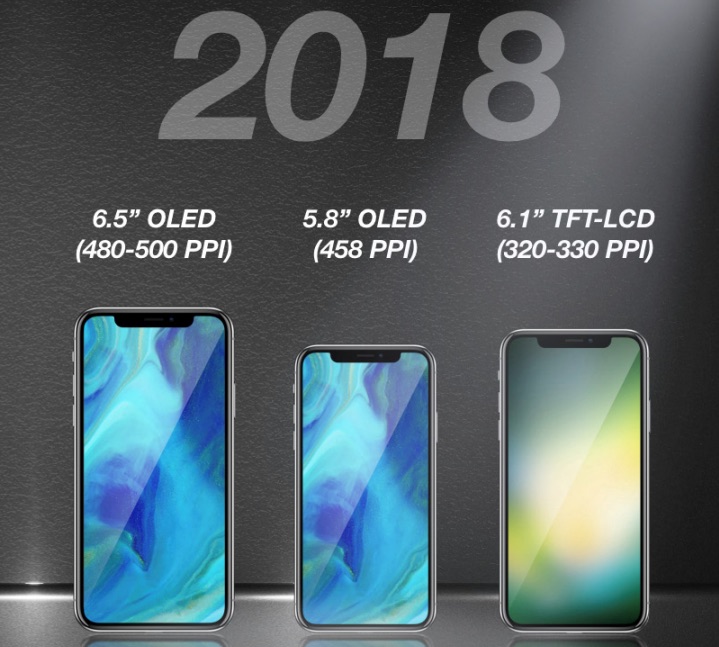
Apple Face ID coming to all 3 new 2018 iPhones models.

Related image


Image result for apple 2018 iphone models

According to ETNews , Apple decided to include Face ID feature to all three new iPhones (two OLED models, one LCD model) that will be released this year and selected suppliers that will provide relevant modules. 

LG Innotek and Sharp are currently in charge of manufacturing Face ID modules for iPhone X. However there will be changes to this group for the upcoming iPhones. While LG Innotek will remain as a module supplier for follow-up models of iPhone X, Apple also selected Chinese companies to be its module suppliers as well.

It is found out that Apple selected two Chinese companies where one is a company that is emerging amongst Smartphone part markets while other one is a popular semiconductor packaging company. It is heard that LG Innotek will be the biggest main vendor out of the three module suppliers while two Chinese companies will be in charge of rest of supplies.

It was noticed early on that Apple has been planning to apply Face ID features to more of its products. Apple announced last December that it would be investing $390 million into VCSEL (Vertical-Cavity Surface-Emitting Laser) manufacturer called Finisar. VCSEL is a major part that goes into Face ID module of iPhone X. However, this is the first time that names of Face ID module manufacturers were materialized and shown. It seems that Apple has started to establish SCM (Supply Chain Management) for new models that will be released this fall.

Calendar Year 2017: Tablets WorldWide market share: Apple 26.8%, Samsung 15.2%, Amazon 10.2%, says IDC


Despite Samsung was dropped to third position in the Q4 by Amazon it is keeping the second position on a Calendar Year  tablets market share but behind Apple who is number one again in 2017.

Samsung did not grow in 2017 and shipped 1.7 million units less than year 2016.

Apple grow with 1.2 million tablets more shipped in the year 2017 than in 2016.

Amazon grow with 4.6 million units more , Huawei grow with 2.7 million units more and Lenovo did not with 800.000 units less.


Q4 2017: Tablets WorldWide market share: Apple 26.6%, Amazon 15.6%, Samsung 14.1% says IDC.


The worldwide detachable tablet market grew to 6.5 million units in the fourth quarter of 2017 (4Q17), an increase of 10.3% from the previous holiday season, according to preliminary data from the International Data Corporation (IDC) Worldwide Quarterly Tablet Tracker. Growth for the entire year remained positive although it showed signs of slowing as detachable tablets grew 1.6% year over year in 2017, down from the 24% growth in 2016. However, some of the slowness was attributed to the launch cadence of high profile devices like the Surface, which was off schedule, leaving older models on shelves as consumers and businesses laid in wait for product refreshes.

"To date, much of the trajectory of the detachable market has been attributed to Microsoft and Apple pushing their wares in the U.S.," said Jitesh Ubrani, senior research analyst with IDC's Worldwide Quarterly Mobile Device Trackers. "However, continued success of this category hinges on the willingness of other PC vendors to participate and more importantly, consumers from other countries to adopt the new form factor over convertible PCs."

"After a concerning downturn in the last quarter of 2016 and first half of 2017, we are elated to see the detachable market maintain another quarter of growth," said Lauren Guenveur, senior research analyst for IDC's Devices and Displays team. "With the first wave of Windows on ARM products expected to begin shipping in the second quarter of 2018, we believe the detachables category has the potential to continue its growth trajectory. Many of these products are being introduced at the premium end of the market. What remains glaringly sparse, and needed, are strong players in the mid-segment of the market."

Outside of the detachable tablets, old-fashioned slate tablets continued to ship in large volumes reaching 43.1 million units during the fourth quarter, and 141.7 million during the year. These devices do not offer much in terms of productivity and have been largely relegated to simple media consumption devices. With narrow margins some vendors are using this form factor as a portal to their larger ecosystems or to promote their brand within broader gadget market. Meanwhile, end-user demand has slowed significantly in the last few years, with 2017 declining 7.6% from the previous year.

Tablet Company Highlights

Apple maintained a solid lead in the holiday quarter driving growth both through its lower-priced 9.7-inch iPad as well as its newly refreshed iPad Pro products. While the lower-price iPad has continued to drive a strong consumer upgrade cycle, the shifting focus is to iPad Pro and its potential in the commercial and education segments. With the only expected tablet growth to come from these segments, Apple's recent launch of "Apple at Work" shows their commitment to maintain its leader position.

Amazon.com was able to steal the second position from rival Samsung as the online giant offered steep discounts during the holiday season. The low-cost tablets have been quite effective as shopping catalogs for Amazon's online storefront and in recent quarters the company has taken things a step further by including its voice assistant, Alexa, in the latest tablets and by expanding to new markets around the world.

Samsung dropped to the third position behind Amazon. Shipments of its detachable portfolio continue to rise, however these gains are outweighed by the declines seen among its slate models. As its lower-cost Tab A and E series is challenged by vendors promising better value, Samsung will face a particular challenge in upgrading its base to both a higher-priced and detachable device.

Huawei's half-hearted approach to the growing detachable segment does not offer a promising outlook for the company. However, the company's strong brand, aggressive channel strategy, and inclusion of cellular connectivity in its slate tablets has helped cement its rank in the top 5.

Lenovo's ability to leverage its strength from the traditional PC business is starting to pay off as the company's detachable tablet business has grown in the past year. However, the bulk of Lenovo's tablets are still comprised of slates that offer great value at low prices. 

Tuesday, February 6, 2018

Samsung chip Exynos 9810 supports facial recognition.


Samsung is confirming the most interesting improvement and innovation of the Exynos 9810 chip the facial recognition capability. It comes with a neural network-based deep learning capability to identify people in images for swift search.

It’s equipped with a separate security processing unit which gives an added protection to all biometric data. Apart from this, the chip supports fingerprint recognition as well as iris recognition.

The  Exynos 9810 flagship SoC 10-nm LPP process node  comes with four high-performance cores clocked at up to 2.9GHz and four low-power A55 cores. The Exynos 9810 is also packed with a Mali-G72 MP18 GPU. So there are up to 18 cores. Thanks to them the multi-core performance increased by 40%, while the single-core performance was doubled in comparison to the Exynos 8895.

Sure at the MWC 2018 Samsung will show all the Exynos 9810 capabilities on the Galaxy S9/S9+ in February 25.


Thursday, February 1, 2018

Alexa loses her voice and shows hilarious new options on Super Bowl Ad. Video.


Alexa Loses Her Voice – Amazon Super Bowl LII Commercial from Lucky Generals on Vimeo.

In the latest Amazon video, the voice assistant Alexa loses her voice, and the company needs to find replacements. Jeff Bezos restlessly asks if the new team will do its job and his employees assure him that there will be no problem.

While the 90-second video unfolds, Cardi B sings her hit track “Bodak Yellow” instead of country music, Gordon Ramsay uses his abusive language to explain the complicated recipe of grilled cheese sandwich, and Anthony Hopkins speaks with dramatic pauses, terrifying the unsuspecting Alexa owner.

During various breaks in the first three quarters of the Super Bowl, Amazon will broadcast short 15-second videos with the stars receiving their headsets to work as Alexa replacements. Then the culmination will be in the fourth quarter when the full 90-second video is expected to air.

Microsoft Office 2019 arriving later this year for Windows 10 only.


Microsoft Office 2019 will be available in the second half of this year with  a preview program, giving testers early access to these apps that will launch in the second quarter of 2018.

Office 2019 will only work on Windows 10, so Windows 7 and 8.1 user who do not upgrade won’t be able to install the new version of the productivity suite.

Microsoft says Office 2019 will run on any supported Windows 10 SAC release, Windows 10 Enterprise LTSC 2018 and the next LTSC release of Windows Server.

Microsoft is also making changes to the way Office can be installed, as the software will be released with Click-to-Run instead of MSI files – these would become exclusive to Office Server products.

softpedianews

Samsung Galaxy S9 could arrive with unlocked FM Radio chip.


User  are needing emergency information to keep them safe and also have requested a long time ago for a FM Radio unlocked chip for listening songs.

Tagstation, which manages the Next Radio app, has announced that Samsung is planning to turn on the FM radio chips in its future smartphone releases. The unlocking will take place only in the U.S. and Canada.

With their FM chips unlocked, Samsung handset owners will be able to listen to free FM radio signals through the free NextRadio app. 

Tagstation said that it believes the move could ultimately help you use less battery and data by not relying on streaming services to access FM radio stations. 

Following the widespread devastation of Puerto Rico, Florida and Texas due to massive storms, citizens found it very hard to communicate. In Puerto Rico, specifically, victims of the devastating hurricane were unable to place calls or access the Internet from their phones. 
Meanwhile, emergency information came via FM radio signals — which, in many cases, the victims couldn't access, because their chips were locked. 
Following the situation in Puerto Rico, regulators and companies like Tagstation, among others, called on major tech companies to unlock their FM chips. They argued it could ultimately save lives. 
In a statement announcing the Samsung partnership this week, NextRadio president Paul Brenner said that Samsung's decision to unlock the FM chip will provide "a means to connect with life-saving information in emergencies."

There is a good chance Samsung could start including FM radio on its next flagship smartphone. Maybe in the Galaxy S9/S9+ that are going to be announced in February 25.


Calendar Year 2017: WorldWide Smartphones market share: Samsung 21.6%, Apple 14.7%, Huawei 10.4%, says IDC.


A slower than expected 2017 holiday quarter closed out the year bringing minimal change to the worldwide smartphone market when compared to 2016. According to preliminary data from the International Data Corporation (IDC) Worldwide Quarterly Mobile Phone Tracker, smartphone vendors shipped a total of 403.5 million units during the fourth quarter of 2017 (4Q17), resulting in a 6.3% decline when compared to the 430.7 million units shipped in the final quarter of 2016. For the full year, the worldwide smartphone market saw a total of 1.472 billion units shipped, declining less than 1% from the 1.473 billion units shipped in 2016. Developed markets such as China and the United States both witnessed a decline during the quarter as consumers appeared to be in no rush to upgrade to the newest generation of higher-priced flagship devices.

"The latest flock of posh flagships may have had consumers hitting the pause button in the holiday quarter," said Anthony Scarsella, research manager, Mobile Phones at IDC. "With ultra-high-end flagships all the rage in 2017, many of these new bezel-less wonders proved to be more of a luxury than a necessity among upgraders. Even though we have seen new full-screen displays, advanced biometrics, and improved artificial intelligence, the new and higher price points could be outweighing the benefits of having the latest and greatest device in hand."

"In the presence of ultra-high-end flagships, the still high-priced flagships from the previous generation seemed far more palatable to consumers in 2017," said Jitesh Ubrani, senior research analyst with IDC's Worldwide Mobile Device Trackers. "Many high-profile companies offered their widest product portfolio ever in hopes of capturing a greater audience. Meanwhile, brands outside the top 5 struggled to maintain momentum as value brands such as Honor, Vivo, Xiaomi, and OPPO offered incredible competition at the low end, and brands like Apple, Samsung, and Huawei maintained their stronghold on the high end."

Smartphone Vendor Highlights:

Apple experienced a slight downturn from the previous holiday quarter as iPhone volumes reached 77.3 million units, a year-over-year decline of 1.3%. Volumes were still enough to push Apple past Samsung and back into first place in the smartphone market, largely because of iPhone 8, 8 Plus, and iPhone X. Apple continues to prove that having numerous models at various price points bodes well for bringing smartphone owners to iOS. Although demand for the new higher priced iPhone X may not have been as strong as many expected, the overall iPhone lineup appealed to a wider range of consumers in both emerging and developed markets. Apple finished second for the full year in 2017 shipping 215.8 million units, up 0.2% from the 215.4 million units shipped in 2016.

Samsung remained the overall leader in the worldwide smartphone market for 2017 despite losing out to Apple in the fourth quarter. The Korean giant shipped 74.1 million units in 4Q17, down 4.4% compared to the 77.5 million units from last year. Samsung finished the year with 317.3 million shipments, up 1.9% from the 311.4 million shipments in 2016. Despite the failure of the Note 7 combined with the endless collective pressure from Chinese players along with Apple, Samsung has managed to remain on top through thick and thin. The pending arrival of their next flagship, the Galaxy S9, may represent the brand's best chance of winning over both new and current customers in 2018.

Huawei continues to hold the number three position despite intensified competition from growing Chinese players such as OPPO and Vivo. Huawei shipped 41.0 million units, down 9.7% from the 45.4 million shipped in the fourth quarter of 2016. The 2017 results look much better for the Chinese giant as the Honor brand helped pushed sales both inside and outside of China. Huawei shipped 153.1 million units, up 9.9% from the 139.3 million unit shipped in 2016. The Mate series and Honor sub-brand continued to drive crucial volume in numerous markets, while the Y series thrived at the low-end. Recent aspirations for breaking into the U.S. market are on hold as both AT&T and Verizon recently cut ties to bring Huawei flagships to the U.S. Entering the U.S. through an official carrier remains critical for Huawei if it wishes to eventually dethrone market leaders Apple and Samsung.

Xiaomi managed to double its share to 7% from 3.3% during the holiday quarter last year. This comes as no surprise since the company has continued to focus on growth outside China, with India and Russia being two of its largest markets. The company has been expanding its number of Mi Stores and Mi Service Centers, with fast buildout coming in markets like Indonesia. It also appointed Lazada to be the official online store and partnered with Indosat to offer a telco bundling package, where consumers can get Xiaomi's smartphone for free by purchasing a data package for a one-year period.  In India, Xiaomi also launched Redmi Y-series in India and roped in Bollywood celebrity Katrina Kaif to endorse the selfie-centric smartphone series as its first product endorser. The Redmi 5A, which was launched at US$78, saw more than a million devices being sold within a month. The brand continued to expand its retail presence by adding more preferred partners, launching new Mi stores, and partnering with large format retail stores.

OPPO dropped one place to the 5th position as the company shipped 27.4 million smartphones while managing to maintain 12% growth for the full year, amounting to 111.8 million smartphones. Like Xiaomi, OPPO has also managed to move beyond the domestic Chinese market and gain a foothold in other Asian countries like India, Indonesia, and Vietnam. In Indonesia, it launched the new F5 series in 4Q17 and also announced its partnership with AOV, a MOBA game. It ran a "selfie campaign" tour in many big cities in Indonesia to promote the AI feature in its selfie camera. In India, it continued to invest in celebrity endorsements and events. However, it faced a slight decline as it made some changes to its channel strategy by being more selective about its retail partners. 

Q4 2017: WordWide Smartphones market share: Apple 19.2%, Samsung 18.4%, Huawei 10.2%, says IDC.


Apple took the lead of the worldwide smartphone market share in Q4 2017 with a 19.2%, thanks to the holiday sales of its star iPhone X new smartphone, but on a year over year sales they slowed down in 1 million units less that Q4 2016.

Samsung went down to the second spot with 18.4%  Q4 2017, slowing down year over year sales in 3.4 million smartphones units less than Q4 2016.

Huawei remained in the third spot with a 10.2% Q4 2017 market share and also year over year sales slowed down in 4 million smartphones units less than Q4 2016.

Xiaomi is the only company that grew up sales from Q4 2016 in 13.8 million smartphones units more  Q4 2017 with a 7% market share.

OPPO also slowed down it sales from Q4 2016  in 4.2 million smarthone units less in Q4 2017 with a 6.8% market share.

NEXT POST: 2017 Calendar year WorldWide smartphones market share.

LG OLED evo M5, the Only True Wireless OLED TV With G5’s Excellence in Picture Quality.

  With Uncompromised, Low-Lag Performance at 4K 144Hz, LG’s Advanced Wireless Technology Sets a New Standard for Clutter-Free Gaming and Hom...

Popular Posts